Wednesday, January 4, 2012

Markouk Bread

Just today I visited with someone who told me that when she was a child her grandmother always made markouk bread. "It was really the very best bread I ever had," she said.
Markouk bread can be purchased in areas that have a large middle eastern population, but of course you can make your own, but it's not so simple. Watch the video made by Sönke Henning Tappe www.caucasus-pictures.blogspot.com
Note how the dough is expertly stretched, formed over a cushion and then baked on something that looks like an upside down wok. In the video the fuel is bottled gas, but I watched another video that had a wood fire under the baking surface.
Let me know if you're inspired to make this wonderful flat bread.

Sunday, December 11, 2011

Lodge Dutch Ovens

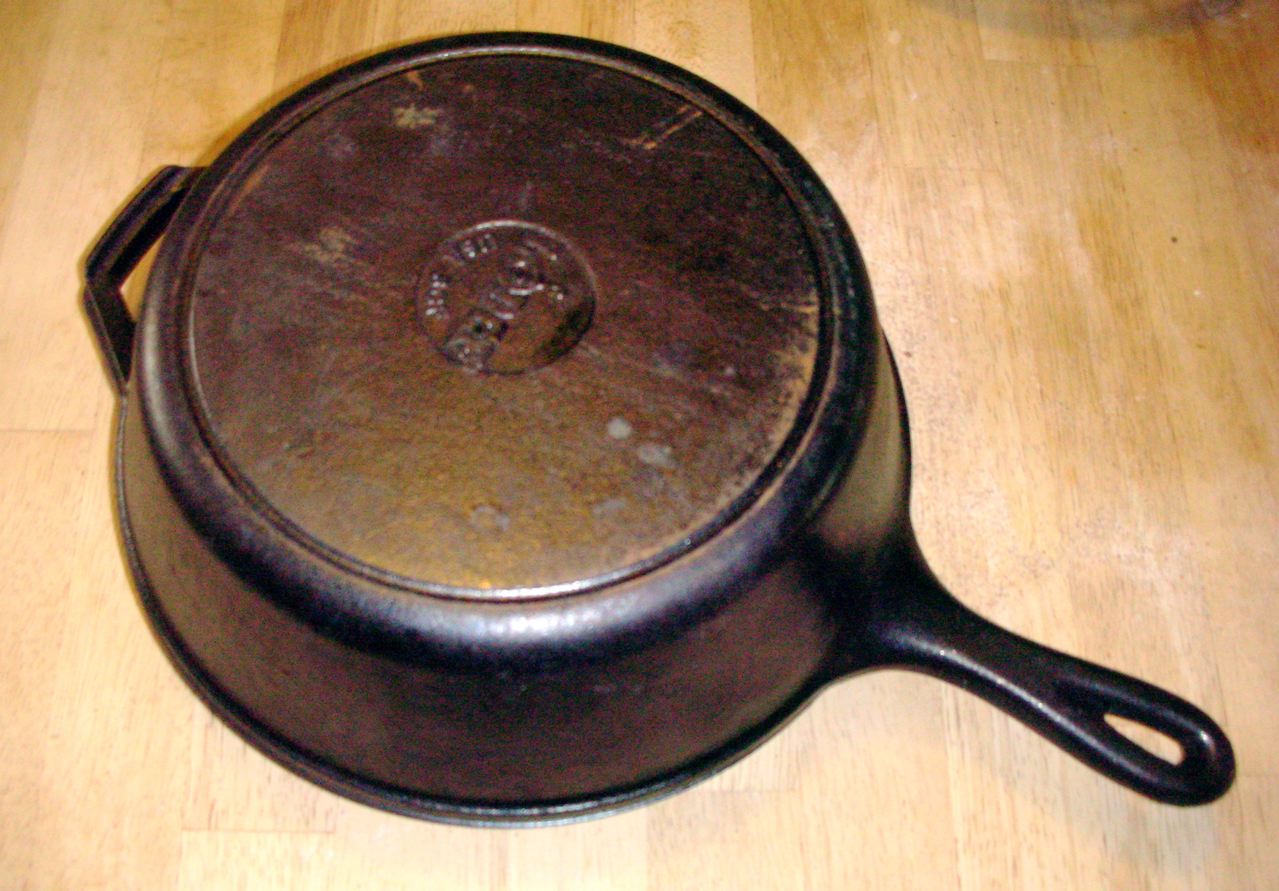
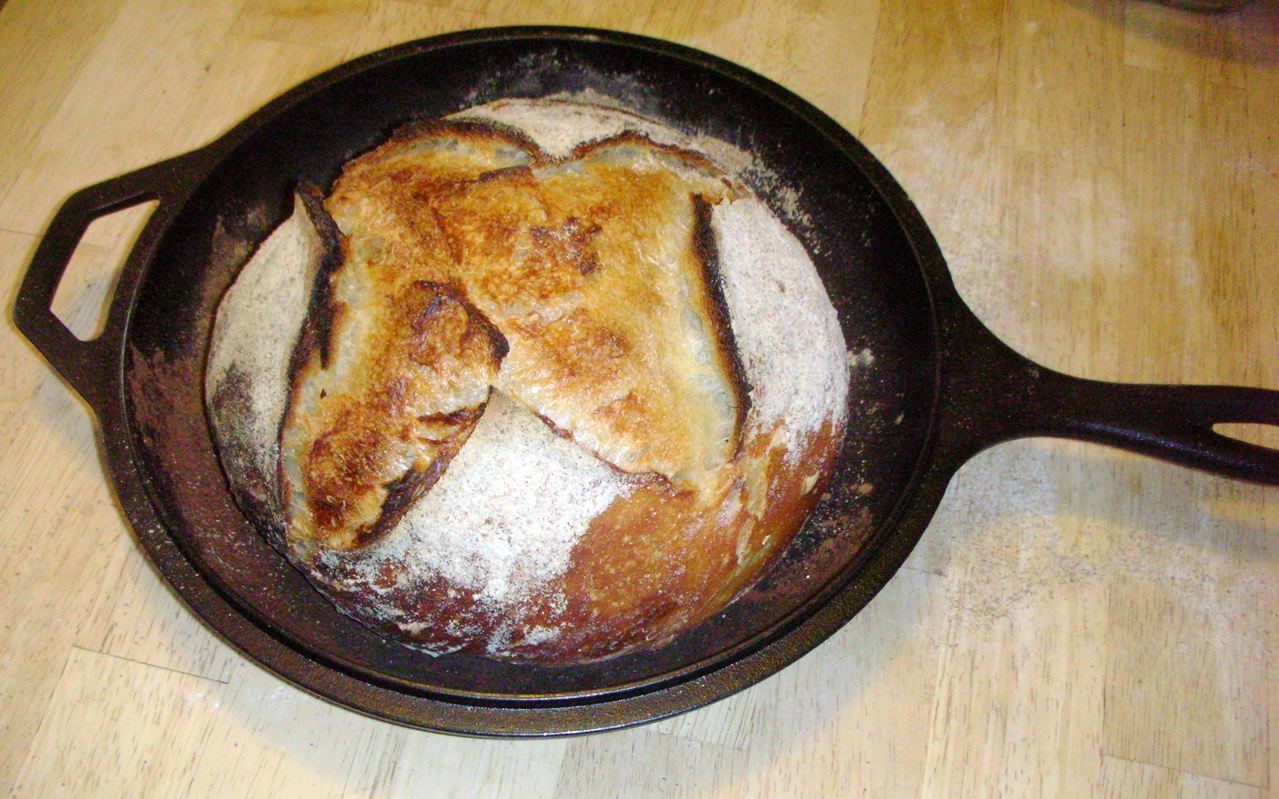
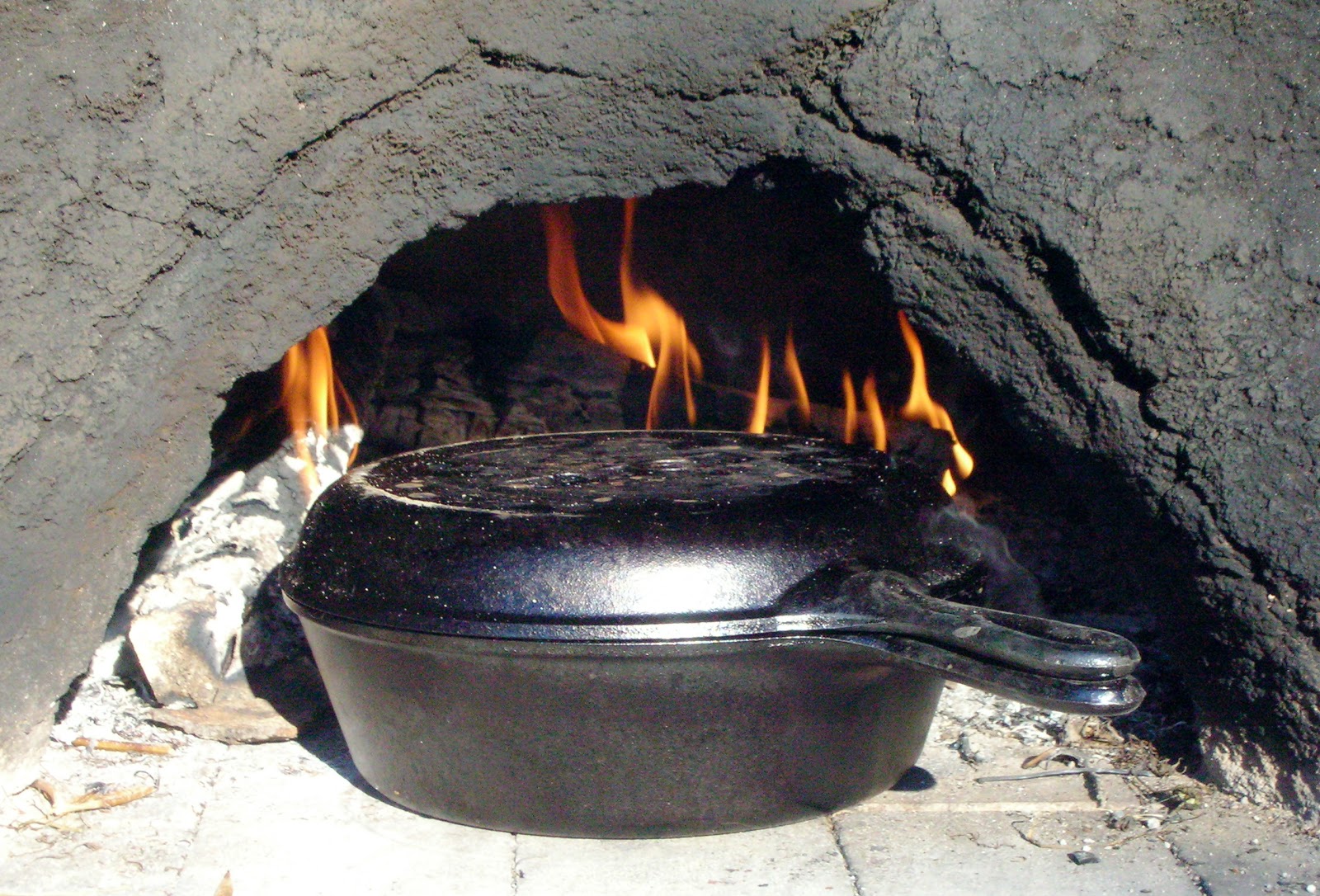
Yesterday I decided to try out my new Lodge Dutch oven, indoors, in my conventional gas range.
Well, I was really impressed with my no-knead loaf. Not only did it look and taste great, but the Lodge was very easy to use. I was able to drop the dough onto the cover and then cover it with the base, rather than the other was around. To me, it's much easier to bake this way rather than plopping the dough over the high sides of the base. I hope the photos tell the story.

Another great thing about Lodge is that it's an American company that actually manufactures the cast iron that it sells. Yes, right here in the United States. Lodge is a very old company that knows how to survive, but it really needs our support.

Wednesday, December 7, 2011

Another Dry Stack Brick Oven

You know, it's remarkable that these ovens are so easy to build, and it's also remarkable that you don't see more of them.
If you don't have money, but you do have a pile of old, red bricks, then you're well on your way. You can do the roof supports with angle iron,  as illustrated, or as I have shown before, you might choose to make a simple brick arch.
These ovens will bake just as well as any other masonry oven, but I highly recommend that you insulate the oven, construct it at a decent baking height, and restrict the size of the oven opening. You don't want all that wonderful heat to escape.
I realize that long ago folks didn't insulate their ovens, and they certainly baked bread in them. However, with insulation, your oven will come up to temperature faster, bake better, and you'll far less fuel. That means less air pollution and less denuding of our precious forests.
Thanks to Stuart Wier for the PDF


Tuesday, December 6, 2011

Gluten Intolerance

 A friend recently sent me this article that calls into question the causes of gluten intolerance. The writer stridently maintains that gluten intolerance is caused by the way bread is prepared. I think the article is definitely worth reading. Also called into question is what really constitutes a healthful loaf of bread.

http://nourishedmagazine.com.au/blog/articles/bread-dread-are-you-really-gluten-intolerant


Brown Bread or White Bread
Bread is good for us. It nourishes our bodies as well as our souls. But when we look at nutrition and bread more closely, we discover there is a problem of digestive assimilation associated with bread made with l00% whole wheat flour.
Bran is highly laxative and a useful component in a high-fiber diet, but do all of us actually need more fiber? Just how much is more? And how regular do we really need to be?
Harold McGee, author of On Food And Cooking, tells us that during World War II the government of Dublin, Ireland, put the population on wholegrain bread to improve health. Almost half the children developed rickets because phytic acid in the wheat bran makes calcium unavailable to the body. Wartime rations contained few dairy products, so the action of phytic acid proved catastrophic to the children.
H. E. Jacobs in Six Thousand Years of Bread quotes Antoine Auguste Parmentier (1736-1812), a French army apothecary:
"My own experience of many years and above all the things I have seen in wartime have convinced me that in the plan of this world the husks and woody parts of plants were not intended to form part of our food. And especially these materials, insofar as they occur in grains, were not meant to be included in your bread. The bran, a woody parenchyma, the husk of the grain, is not nutritious precisely because it contains no meal. The art of the miller should consist in removing this husk from the grain--but without pulverizing it so that it can no longer be sifted out. Close grinding is therefore harmful."
So where do we go from here?

Sunday, November 27, 2011

Parchment Paper

I've never used it, but I can see that there are certain advantages to using it in a conventional oven. If you're making no-knead bread as I do, often it's difficult transferring the somewhat amorphous loaf to your very hot Dutch oven. By using parchment paper, the process is simplified in that you simply lift the risen loaf by holding the edges of the parchment paper and drop it, paper and all into the Dutch oven. The paper will not burn. The video shows the whole process.
Note how the hot Dutch oven cover is dropped on the floor. Actually it's hard to miss, and maybe we should all take safety precautions by wearing steel-toed boots.

Tuesday, November 22, 2011

King Arthur

I use almost exclusively King Arthur flour and have had great results with it. The company is cooperatively owned, and I give it my support.
Jeffrey Hamelman of King Arthur, a certified master baker introduces a five part video that illustrates lots of interesting baking techniques.

Although it's difficult to navigate between the videos, they are definitely worth watching, particularly the video on shaping and slashing baguettes.

Thursday, November 17, 2011

Gluten Free Cornbread

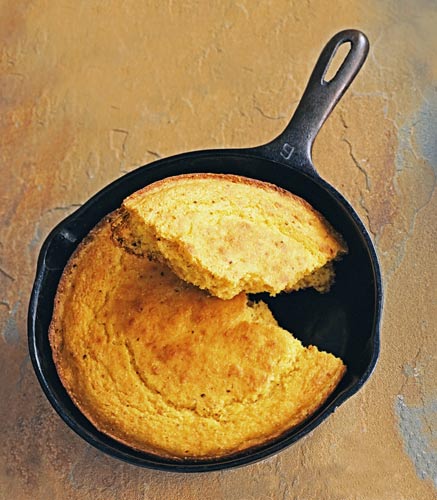
For a long time now I've been resisting the gluten free craze. It seems like everyday someone is discovering a new syndrome, and there is always someone to capitalize on it. Anyway, I've been asked for a gluten free cornbread recipe, and I believe I've come up with something that doesn't compromise the qualities I look for in traditional cornbread. After doing some experimenting and searching the web, here it is.
GLUTEN FREE CORNBREAD 
Ingredients:
1 cup brown rice flour
3/4 cup stone-ground cornmeal 
3 Tablespoons of honey
2 1/2 teaspoons baking powder
3/4 teaspoon salt
1 Tablespoon canola oil
2 beaten eggs
1 cup milk
1/4 cup canola oil

Directions:
If you're baking outdoors in your wood-fired oven, then it's okay to maintain the fire while the bread is baking. Push the fire to the back or side.
If you're baking in a conventional oven indoors, then preheat the oven to 400 degrees. Mix the dry ingredients (flour, cornmeal,  baking powder, and salt) together in a bowl and set aside.
Spread 1 tablespoon of canola oil  in a 10 inch cast-iron skillet.
In another bowl, combine the eggs, milk, honey and 1/4 cup of canola oil, stir into the dry ingredients and then pour into the skillet. 
Bake for about 18 minutes or until a wooden toothpick comes out clean. Serve warm.

I like to use buttermilk or soy milk, but any milk will work. You can also substitute melted butter for the canola oil.


Thursday, November 10, 2011

Firewood

If you're planning to build a wood-fired oven, then you should really learn a lot about firewood.
A couple of years ago I cut down a white birch tree and sawed it into 16" lengths. I didn't bother to split it, thinking that the birch would simply dry in the woodshed, and I was in no rush. Just last week I started to split it, and I discovered that the wood was rotten inside. The lesson for me was that firewood really needs to be split after its cut so it can dry out properly. This is particularly true of white birch because the bark is highly water-resistant, and if the birch is not split, then the moisture stays inside and damages the firewood. Probably because birch bark forms such a protective coat, the Native Americans used it for canoe construction and vessels to hold water. For great information about firewood go to this website.


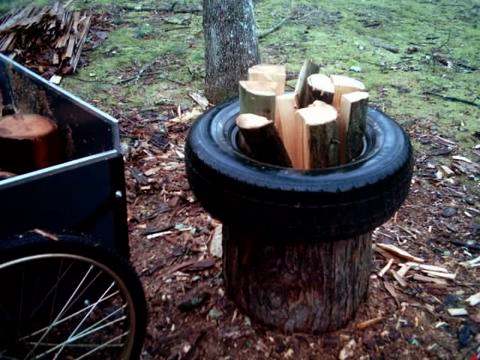
Old tire sits on chopping block to prevent firewood from flying helter skelter when split.


Sunday, November 6, 2011

Bread Pudding

In all fairness I have to admit, there are times when I have too much bread around the house. My wife is an expert at making bread pudding, and it was time to use up all that bread. With her guidance, we both put this together.


 Ingredients:
3 medium apples, peeled and sliced
¾ cup of raisins
4 cups (237g) of 1” cubed bread
1 tablespoon butter
2 cups milk
2 beaten eggs
¼ teaspoon salt
1 teaspoon cinnamon
pinch nutmeg
1/4-1/2 cup honey


There are many variations of bread pudding, and there is simply not one recipe. A favorite appears to be a sauce made with brandy or bourbon that's poured over the pudding. hmmm 
 
Procedure:

 Place cubed bread on bottom of Dutch oven (if you need to buy one, then I highly recommend one from Lodge.) Place apples on top of bread. Add butter to milk and scald on stove top, campfire or in wood-fired oven. Add raisins, cinnamon, nutmeg, honey to the scalded milk. Add hot liquid slowly to beaten eggs (you don’t want them to cook).
Pour liquid on top of the apples and bread.
Cover Dutch oven and place inside a low to medium hot wood-fired oven. You can maintain a small fire in the back or to the side. It will take approximately 30 minutes to bake. Of course, nothing is exact here because of all the variables in baking outdoors, and for this reason, it’s my favorite way to bake. I like to watch the progress every five minutes or so because I don’t want to burn the dessert.
Serve it hot or cold, and I like it with ice cream. 


Sunday, October 30, 2011

Sharing Bread

I think that most of you who read this blog really bake more bread than you and your family can possibly eat. If that's true, Then consider sharing it at a homeless shelter.

 Bourke-White

If you think it's a good idea, here are some sugestions:
Share only your very best loaves.
Avoid crusty loaves because many of the recipients have poor teeth.
Slice the bread before taking it. The workers at the shelter have enough to do.
Place the sliced loaves (after they've thoroughly cooled) in a unsealed plastic bag because you want the bread to breath a little and to stay soft. 
If they like your bread, and I'm sure they will, then you'll probably have trouble keeping up with the demand.