Monday, August 8, 2011

Oven building classes

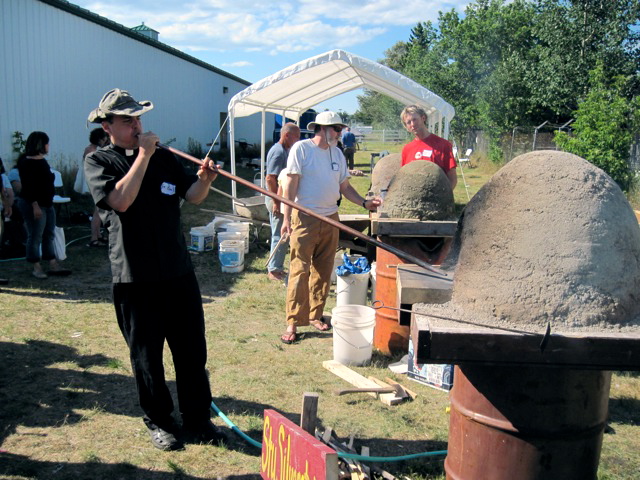
Waterville, Maine Adult Ed. fall 2011

Register on line beginning Aug. 9 (click above)


BUILD A WOOD-FIRED PIZZA/BREAD OVEN
Workshop taught by Stu Silverstein and Roy Feihel
If you’ve ever wanted to have a pizza oven in your backyard, then join us and learn how to build various types of wood-fired pizza/bread ovens. No experience required. Participants will work with clay and brick and construct low-cost ovens that will make the very best pizzas and breads. Discussions include techniques for making pizzas, flat breads, sourdough and no-knead breads. Unique Sourdough starter shared with all in class.
Everyone will get to bake in the instructor’s oven and contribute to the pizza party at the end of class.
Three participants (who are first to reserve) can take a mini-earth oven home for an additional $50.00 fee.
Classes will be on Saturday, Sept. 17. Sunday, Sept. 18 will be the rain day.
Saturday, Oct. 1 Sunday, Oct. 2 will be the rain day.
9 A.M. - 3 P.M.
Materials fee for each participant $25.00.
All fees are payable to the office of Adult Ed.
Location: Waterville
Class limit 13 participants


Tuesday, August 2, 2011

Hearth Insulation

Insulating under your earth oven hearth is a critical step that should never be eliminated. A well insulated oven will heat up faster, retain heat much better and use far less fuel than an uninsulated oven.
You have a number of options for insulating under the hearth, and I'm assuming you have a heat sink under your fire bricks such as a poured 4" concrete slab or 4" thick solid concrete blocks.
The insulation would go under the heat sink, not of top of it.
A real low tech method (promoted by Kiko Denzer) of insulating would be to use sawdust and clay slip. This is not an excellent insulator, but it does work, and the price is great. That means it's generally free.
Going up a notch would be to use perlite or vermiculite mixed with clay slip or Portland cement. Although not free, the price is quite reasonable and perlite and vermiculite are better insulators than sawdust.
Another possibility would be to use foam glass. This has great insulation qualities, but it is expensive. Although used by many professional oven builders, it is not accepted by all. I spoke to one today who told me that he has dismantled some ovens and found the foam glass to have completely disintegrated.
The oven builder who would not sell foam glass does sell a product called Super Isol which also is not cheap, but does have an extremely high insulation value.
Of course, professionals often disagree, but if you're working with a real mason, I would do what he or she recommends. Generally, they have been building ovens for years and have a whole history of experience.
Not being a mason, I have found it quite easy to locate and use perlite or vermiculite as insulation for the ovens I've built.
An oven base filled with 4" of perlite, awaiting solid concrete blocks and fire bricks

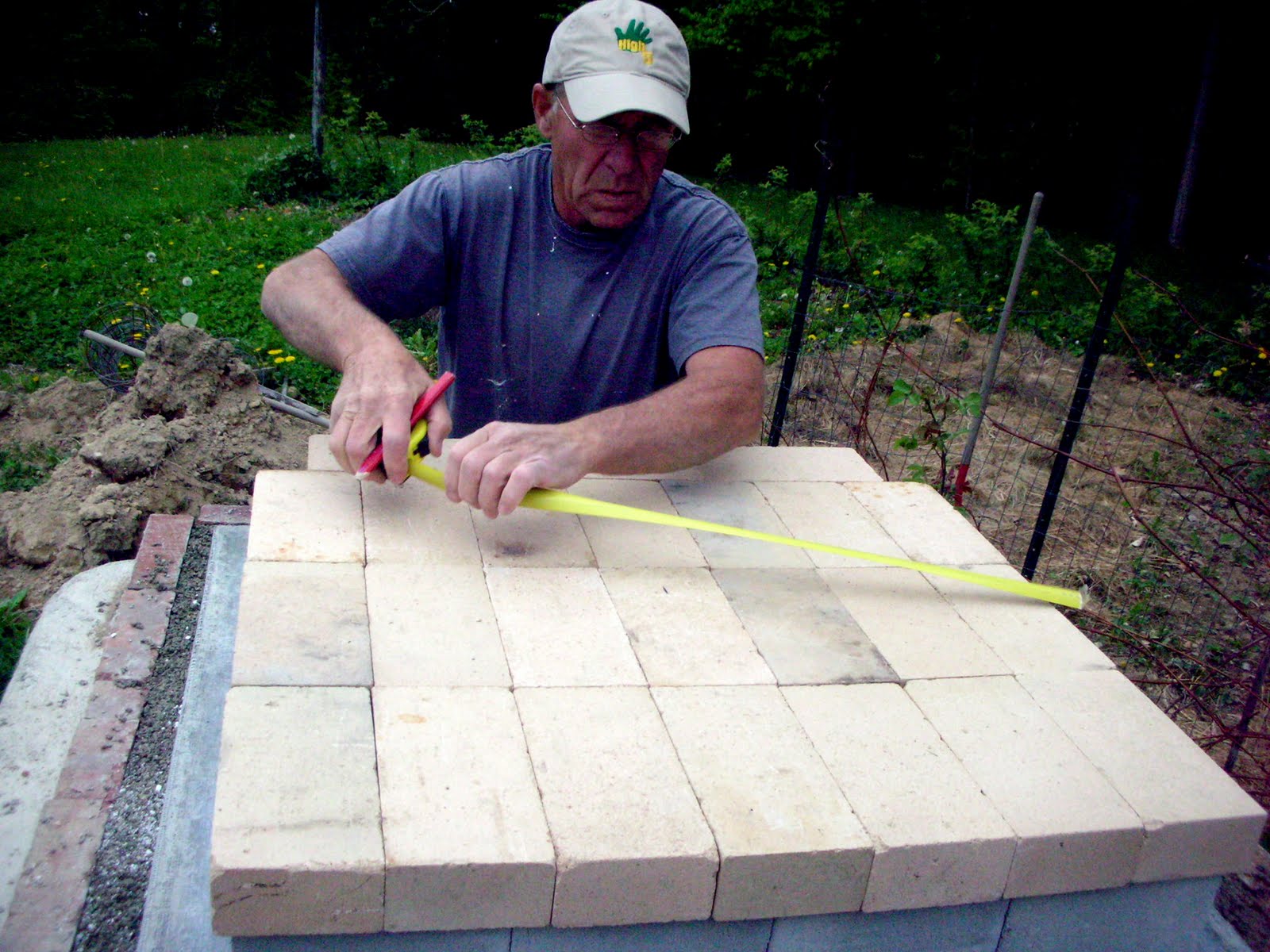
Fire bricks sitting on top of solid concrete block that rest on cement board. Underneath the cement board is the perlite.


Saturday, July 30, 2011

Kneading Conference 2011

It was another highly successful Kneading Conference in Maine this summer.
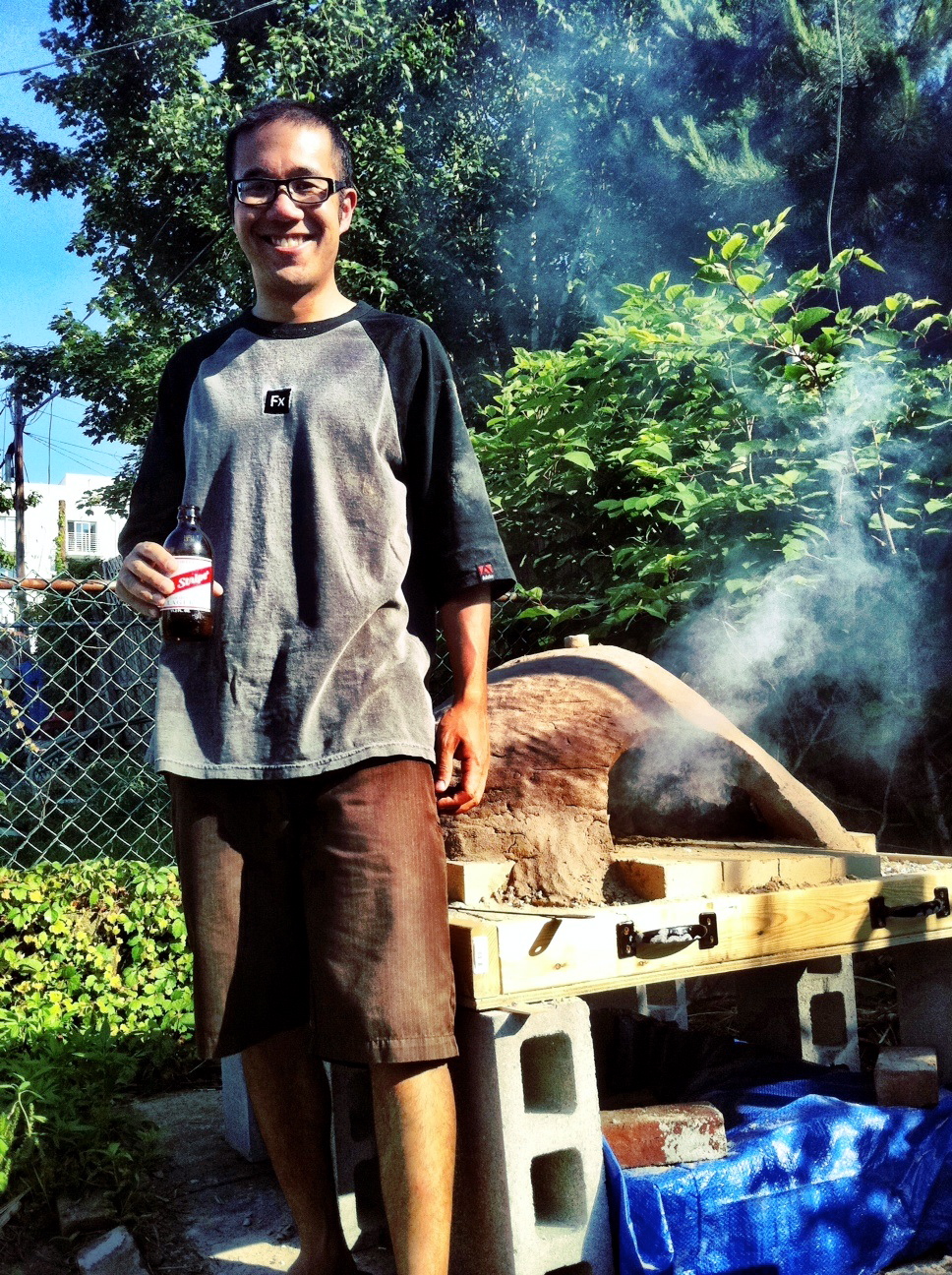
In my workshop, we constructed six earth ovens that were taken home by participants. Without the help of David Priest and Bill Babb, I would have totally lost my reason. On Thursday morning participants made five ovens, and in the afternoon we were eating flat breads made in the ovens. I'm sure everyone enjoyed the conference as much as I did.

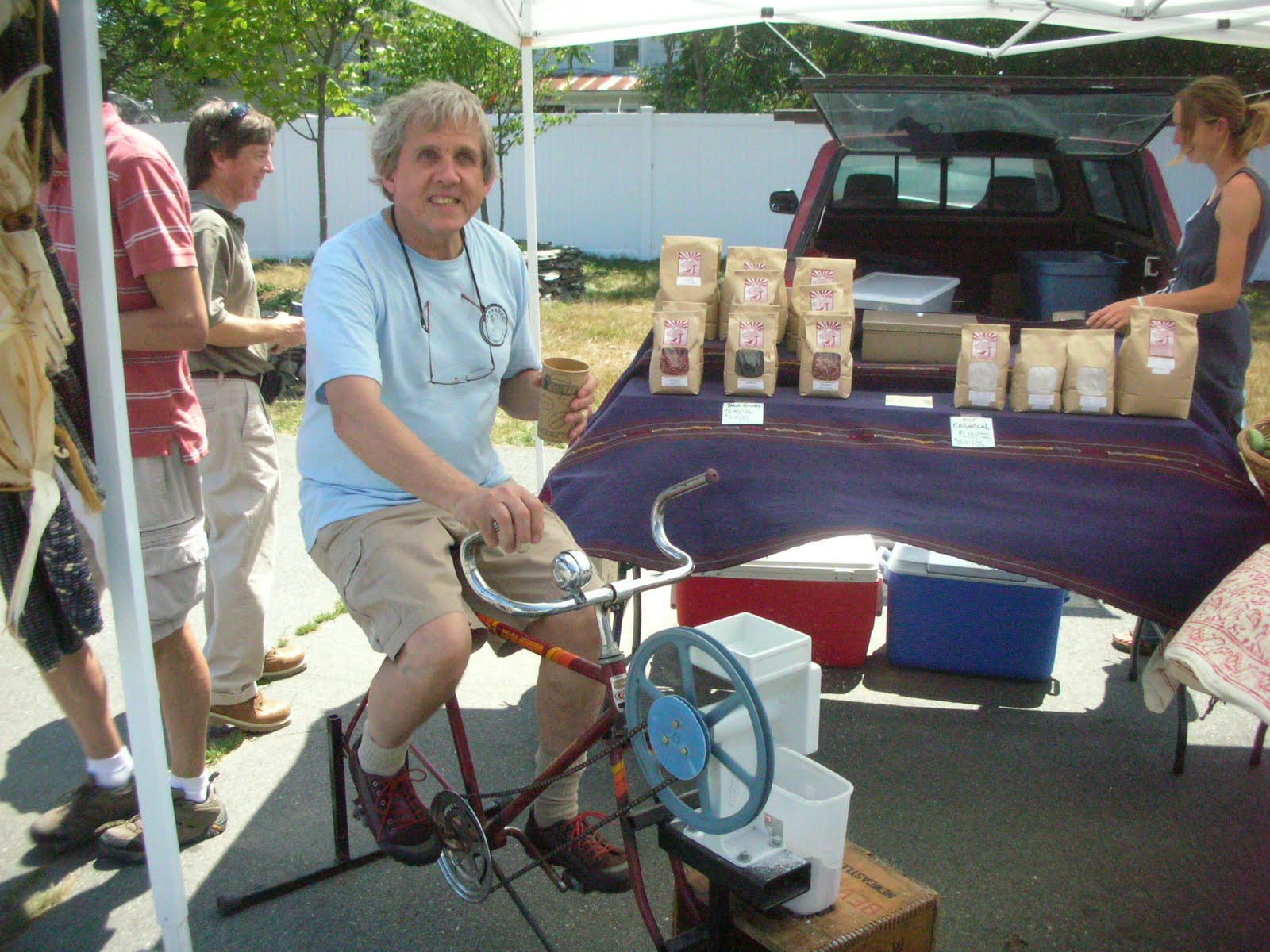
 Mark pedals stationary bicycle that's hooked up to a grain mill

 The Paparazzi marvel at the first pita bread enlarging in the new oven

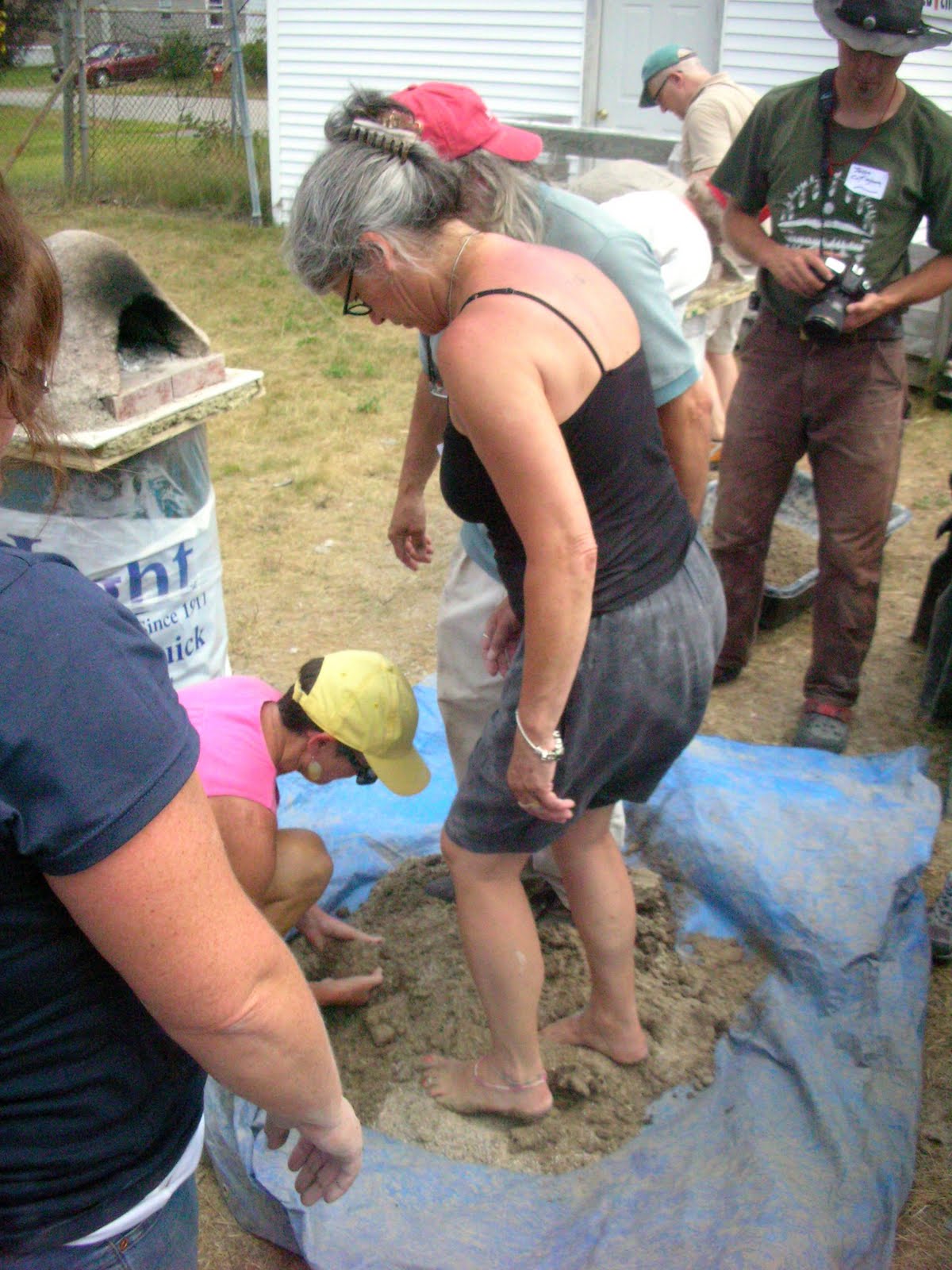
 Making mud

Wednesday, July 20, 2011

Bread Earth and Fire

Hi
Many of you have asked when my book BREAD EARTH and FIRE will be done, and now I can say, yes, it's done. The book is available in hard copy form or it can be downloaded.
I have written about how to build inexpensive earth and brick ovens. In fact, if you have clay and some rocks, your oven might cost less than $100.00. These ovens will perform just as well as more expensive ovens, taking minimal skills to construct one. And that's what BREAD EARTH and FIRE is about.
In the book, I tried to answer all the questions that came up in my earth oven workshops regarding oven construction. In addition, there are sections on sourdough and no-knead bread baking.
You'll find lots of photos in the book and what I've attached are just a few of them.
Copies of the book can be ordered right from this website.
The hard copy has black and white photos, and the download version has all color photos.

Some photos from the book


Sunday, July 17, 2011

Sourdough Rye

Made with 100% rye flour, a little salt and water, this bread is so good that I keep asking myself why I should make anything else. I learned to make this bread many years ago by watching Peter Schumann at the Bread and Puppet Circus in Vermont.
Rye flour is not easy to work with, to put it mildly, but I assure you, the results are well worth the effort.
Slice the bread as thinly as you can and dip in extra virgin olive oil in which you have crushed some garlic. There's really nothing like it.

Tuesday, July 12, 2011

It's Not Too Late

Join us at The Kneading Conference this summer for workshops, discussions and really lots and lots of bread. You won't be disappointed. I'll be leading a workshop on earth oven construction, and I'd sure like to see you there.


Wednesday, June 29, 2011

Oven In France

Hi
I just returned from France where I built a brick oven with a remarkable handyman, Fernand Toucourt. The oven base was constructed with stones found right on the property, and there were lots of them.
The oven itself was constructed with used (free) firebricks and the insulation was a mixture of vermiculite and cement. Finally, we stuccoed the dome with cement.
Materials cost less than $100.00. Not bad.
Pizzas took less than three minutes to bake.


Sunday, June 5, 2011

Bread failures


When 550ºF is not 550ºF.
When I'm preparing to bake bread, I normally fire my for approximately an hour an a half and put in the breads when the temperature is about 550ºF. and falling. Yesterday I put a loaf into the oven when the temperature was also 550ºF, but the oven was not falling because it had been fired six hours earlier and was fully saturated with heat. I attempted to rush the process, and I achieved a failure. The loaf was more than a little rustic in appearance; it was burnt.
A simple temperature reading is certainly not enough. I should have waited until the oven was clearly falling.

Yesterday's Workshop

June 4, 2011

Under clear blue skies, no humidity and a temperature of 72º F., no one could complain. Besides, we constructed three mud ovens that participants took home and one demonstration brick oven that was an instant hit. In fact, two of the participants returned today to gaze in wonder at the simple brick oven that they had constructed yesterday. And who would blame them.
The oven took three fledgling oven builders about two hours to construct.
The cost of the materials was about $68.00
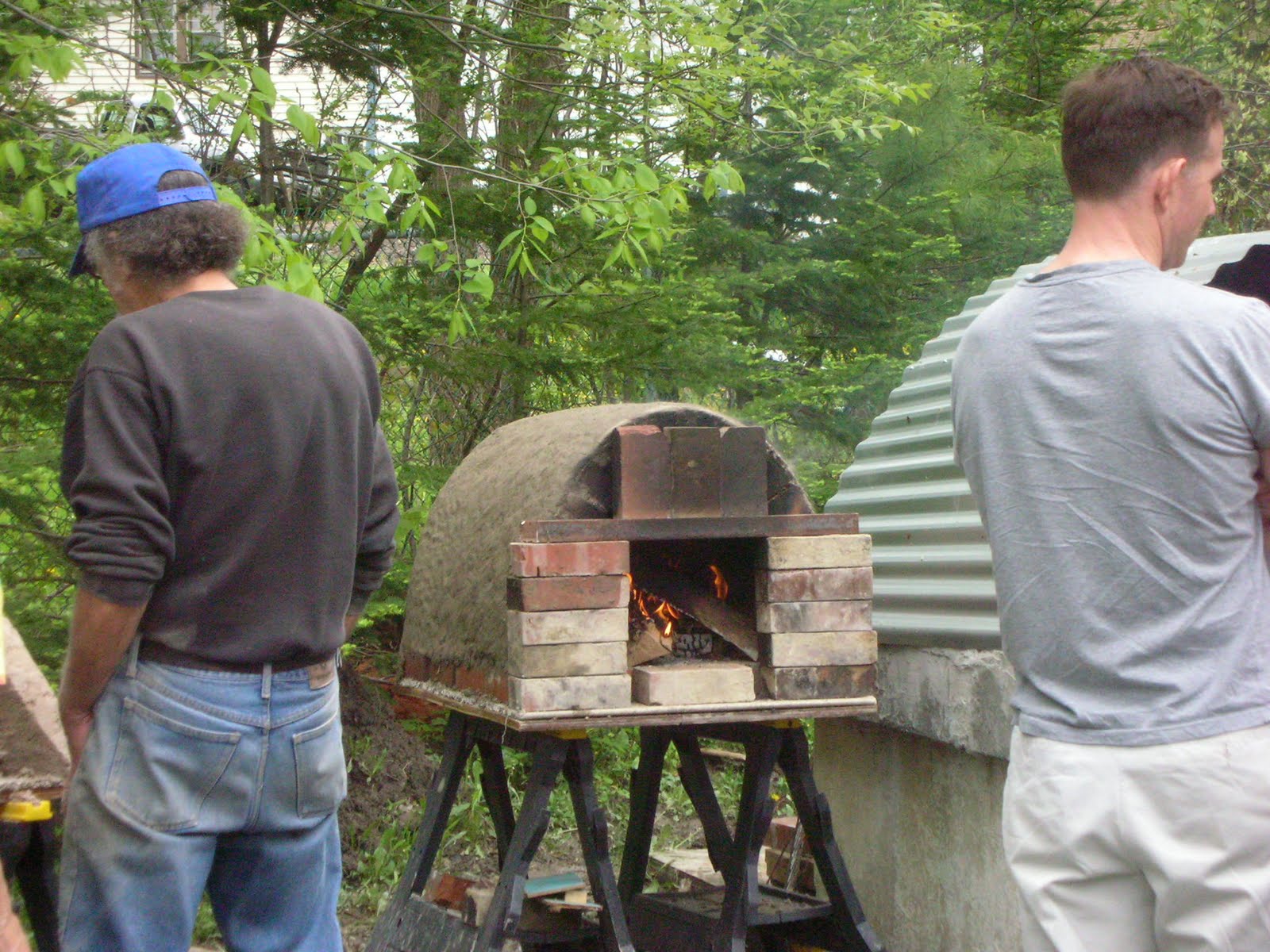
 Low-cost, easy-to-build brick oven
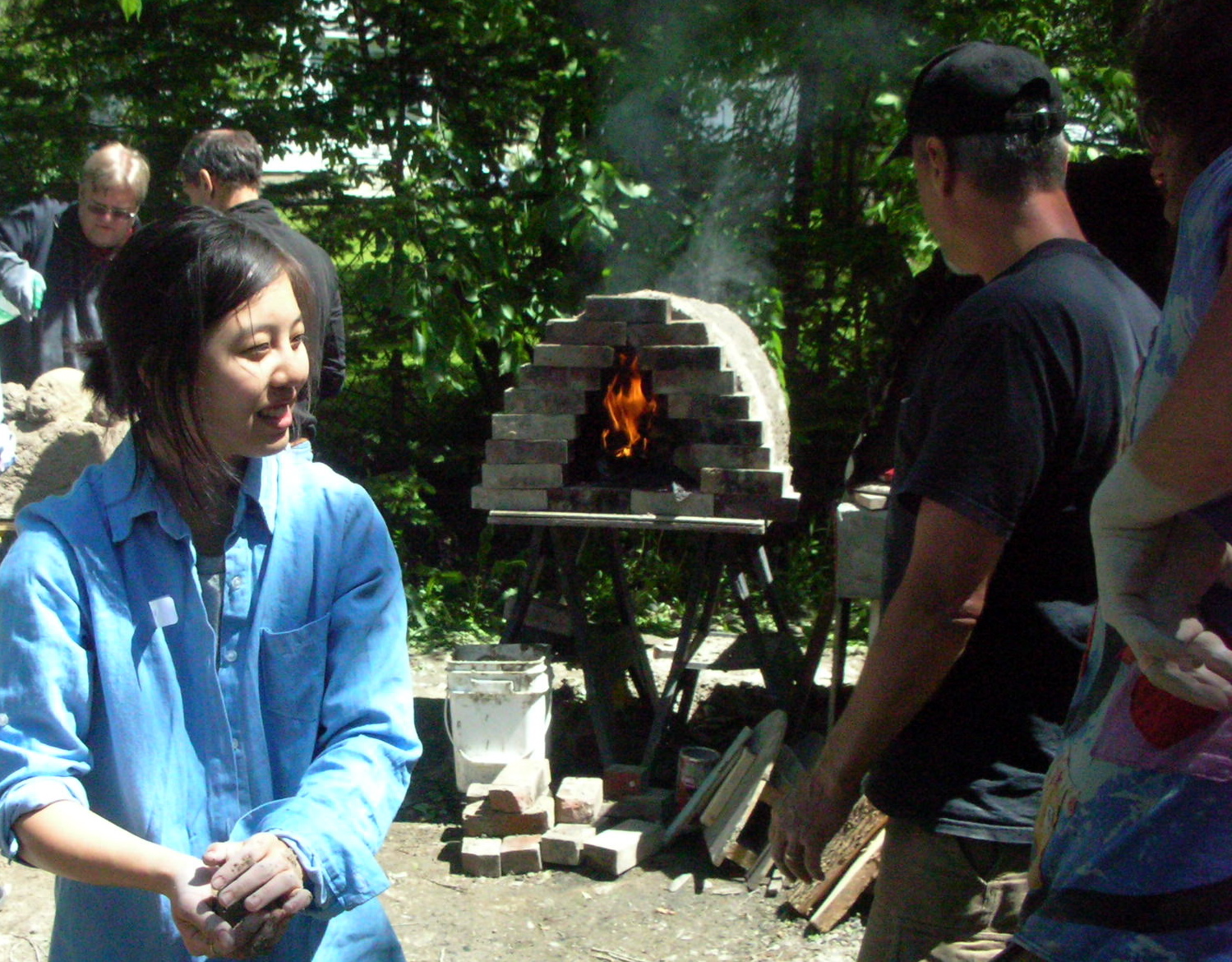
Immediately after building the oven, it was fired up, and within one hour we were making pizza. The floor temperature easily reached the desired temperature of 700ºF.
               At work

  Brick oven in back
(folks were still mixing mud, and the brick oven was already done and fired up)

Not only did this oven go up faster than the little mud ovens, but this was supposed to be a mud oven workshop. Sure, folks enjoyed the mud ovens, but really, I think most decided that they'd like to have the low-cost brick oven in their back yards.


  Yesterday's oven builders


But will they ever be able to get it out of the car?


Sunday, May 29, 2011

The Corbel Arch

Having just finished a workshop where the participants completed two mud ovens and one brick oven, we then needed to constrict the opening of the brick oven so it would better retain heat. We first piled up a few bricks and with two short lengths of angle iron, we were easily able to make the opening smaller.
Without angle iron, a corbel arch is also a simple way to accomplish the same task. This type of arch is found in many parts of the world, but it is particularly prominent in Maya architecture.
The aesthetics of your oven design can be a reflection of your own unique ideas. These simple low-cost ovens really lend themselves to your creative spirit. If you make a mistake, well, no big deal because you can try something else.