Monday, September 26, 2011

Walter Lane's Biscuits


 WALTER LANE’S BISCUITS                                

This is the only recipe in Bread Earth and Fire that calls for baking powder, milk and butter.
Walter Lane was one of the subjects of a documentary film I made with Richard Searls, and this recipe is not unique, but Walter’s baking method was most unusual and resourceful.
Walter Lane was always baking biscuits in a stovepipe contraption that he constructed above the oven in his trapper's shack. The stovepipe compartment, where the biscuits were placed to bake, captured waste heat from his woodstove. There was no way he'd allow heat to escape up the chimney without putting it to good use first. Walter was the ultimate recycler.

 
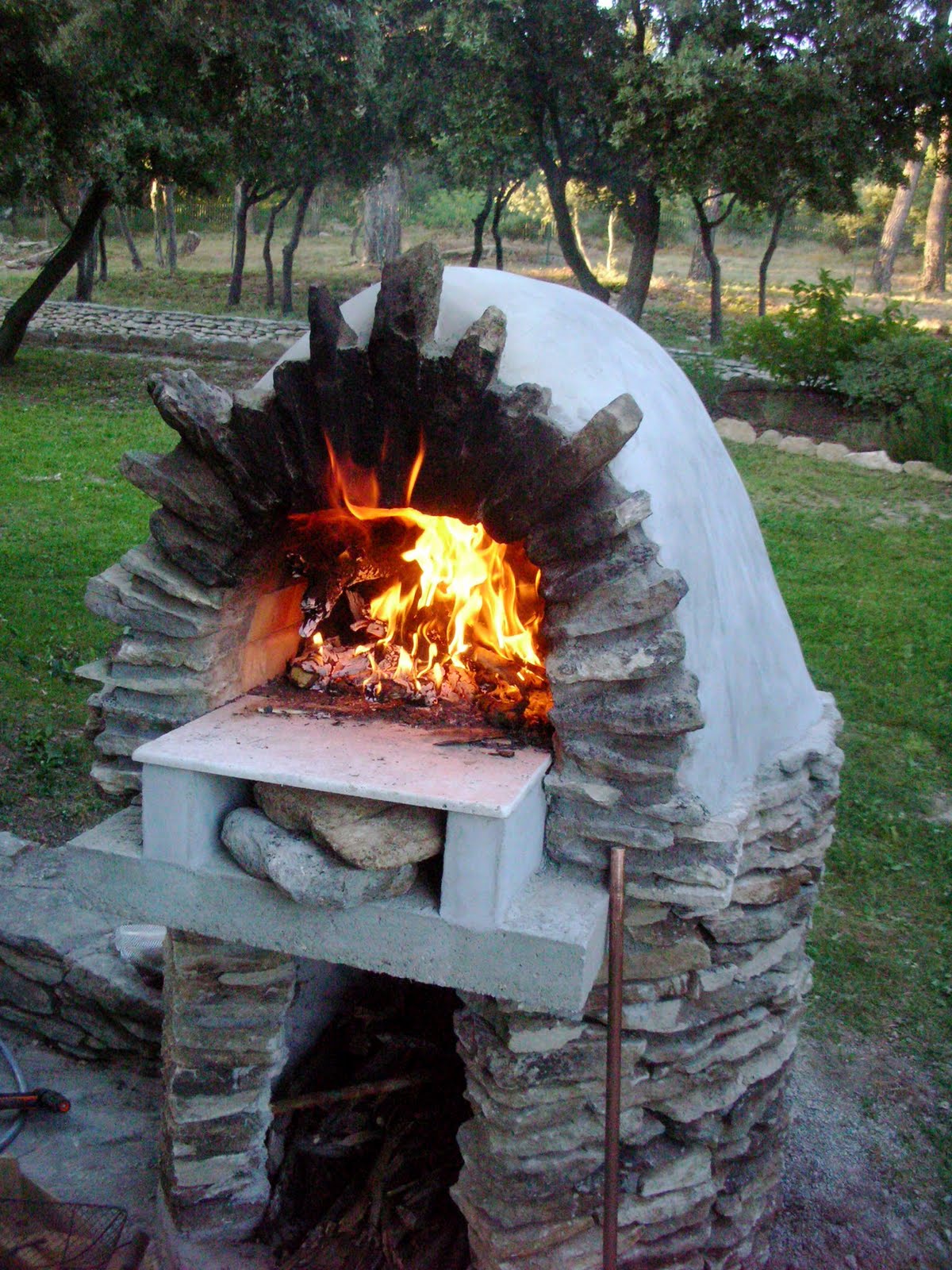
The oven shown is quite a pricey affair, but Walt was able to fabricate something similar for just a few dollars.

YIELD: 6-8 biscuits
INGREDIENTS:                                                                                              2 cups all-purpose, unbleached white flour                                 
2 teaspoons double-acting baking powder
1/2 teaspoon baking soda
1/2 teaspoon salt
1/2 cup cold butter (1 stick)
1 cup (approx.) buttermilk or regular milk

PROCEDURE:
Biscuits require a hot oven. Fire your oven well in advance; because once you blend your ingredients, you can bake immediately. There’s no waiting for anything to mature or rise.
    In a medium-sized bowl, thoroughly blend the flour with the baking powder, baking soda and the salt. Now cut in the cold butter. This means placing small chunks of cold butter on the flour and working it into the flour with a pastry cutter, a fork, or your fingers. After the butter is carefully blended into the dry ingredients, stir in the milk. For biscuits, less stirring is better than more. The texture should be slightly gloppy. Add slightly more or less flour or milk to achieve the proper consistency.
Into a cast iron skillet, drop 1/4 cup scoops of your mixture. Slide the skillet into the oven, keeping the fire to the back or sides. Move the skillet around to get the biscuits to bake evenly. Serve hot with butter and jam, and try not to think about your arteries. You can always leave the butter out of the ingredients. Made with buttermilk, they’ll still be great.


    Still image from the movie Dead River Rough Cut   
      Walter Lane shares his biscuit with a Canada Jay outside his trapper’s shack.
Go here to watch trailers and stills from the movie. 


Here is where you can help. It's been over 35 years since Richard Searls and I made this movie, but now we think it's time for something else.

There can never be a sequel to Dead River Rough Cut, it just can’t be done. However, Richard and I are talking about a new movie, tentatively titled Dead River Pink.
We do know about Ann LaBastille, but unfortunately she died just a couple of months ago.
Certainly there are some “woodswomen” out there living a “rustic” life. They don’t exactly dislike men, but they want to make their own decisions and have discovered that it’s simply less hassle and more rewarding to live alone. This is not to say that they’re adverse to spending time with a guy, but they just don’t want to live with one.
Maybe she’s an artist/writer living in the forest.
Maybe she’s an herbalist, but at night she’s a ...
Maybe she works in a bank, but retreats to her shack in the woods.
Maybe she does every conceivable thing to avoid a “real” job.
Maybe she’s a migrant farm worker who follows the harvests.
Maybe she’s a Native American who has gone back to the “traditional life.”
Regardless, she has to be charismatic, dynamic, outspoken and fearless.
Any suggestions would be most appreciated.
Stu Silverstein
ssilverstein@gmail.com



Thursday, September 15, 2011

Mushrooms For Pizza

If you live in the northeast, then there's no need to buy mushrooms from the store at this time of year. There's is an abundant supply if you know where to look. Go mushroom hunting with someone you trust if you're a beginner. That's important.
I'll be teaching an earth oven building class this Saturday, and of course we'll be making pizza. This morning I gathered some wild mushrooms that we'll be using for toppings.
 chanterelles

 Puffball (what I found was quite a bit smaller)

Black trumpet

You might ask how much to use on a pizza. For this, I really can't tell you. Go by visual appeal. It's okay to use too many or not enough because next time you'll probably get it right. The same applies to flour when making bread. Experiment. Use more than you think you need, and then use less than you think you need. Keep pushing the limits until you discover what works for you.
In Mark Bittman's video of Jim Lahey making no-knead bread, Jim says to use 3 cups of flour to 1 1/2 cups water. If you go by this proclamation, then there's a good chance you might end up with a soupy mixture the next day. Go by feel and trust your senses. That's really more important than religiously following recipes.
And remember what Emerson said. "A foolish consistence is the hobgoblin of little minds."

Thursday, September 8, 2011

False Assumptions and Common Errors

False Assumptions and Common Errors

Most people think that building an earth (mud) oven is easier to accomplish than constructing a brick oven. This is generally not true. The brick oven shown can easily be made by a non-mason. There are no bricks to cut, and after all, a brick is generally a brick, whether it's a red clay brick or a fire brick.
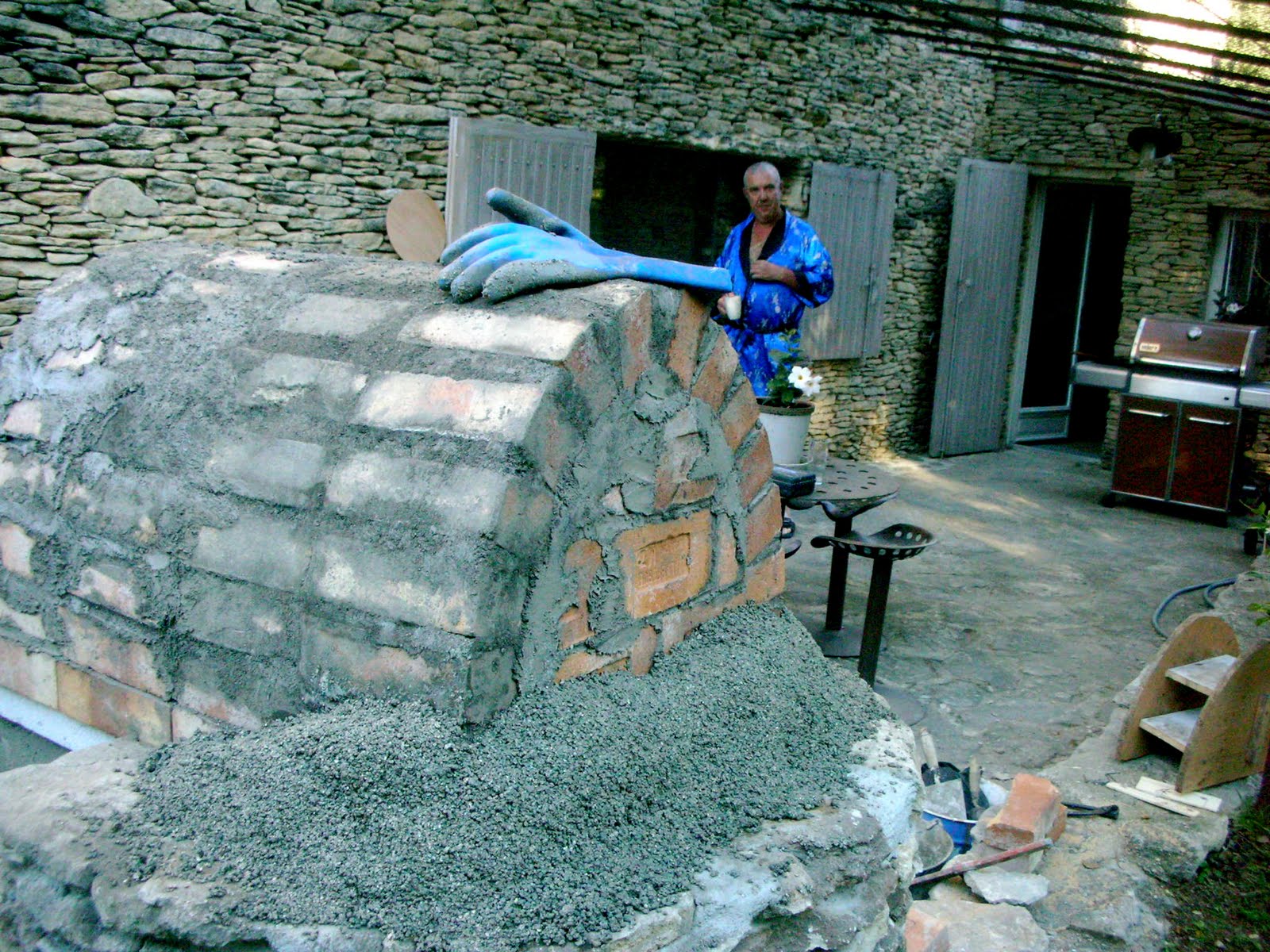
A simple brick oven with a cement stucco.

Same oven as above, but under construction and a view from the back. Four simple brick arches form the core of this oven.

Note how the concrete slab (hearth mass) and the fire brick do not come rest on or come in contact with the stone base.  The slab (hearth mass) rests on insulation so that heat from your oven will not be transferred to places where you don't want it to go. You want to keep as much heat as possible in the oven. Often, oven builders will rest the hearth mass and fire brick floor right on the oven base. A bad move. 

Another view of an oven being constructed properly. Note how the concrete slab (hearth mass) and the fire brick "float" on a sea of insulation.

Oven being insulated, and it is the insulation that comes up to and on the oven base. That's okay. Sometimes oven builders will build the mud dome with the sides resting on the base. Heat will then be transferred from the mud dome to the stone base, and why would you want to do that?


If you're building an earth oven, then you'll be working with mud. You really can't get much more basic than mud, but mud comes in various textures, and that is where the difficulty lies. 
A soupy mud will slump, and mud that's too dry won't clump properly. You need something in between, and getting the right texture is not something easily described in words. To make mud, I like a two parts sand to a one part clay mix. Then I add water slowly.  If you want a mud oven, then try to take a workshop first or have someone who has already built one give you a hand.


No matter what type of outdoor oven you decide to build, there are some basic principles that are universal.
Your oven should be insulated. An insulated oven will retain heat longer and you won't burn as much firewood. 
Mass is especially important if you're making raised loaves of bread because breads bake from retained heat. Mass is much less important if you're just doing pizzas and other flat breads because these breads bake with a fire maintained in the back or side of your oven.
Often some very handy people make some glaring errors when constructing their first oven. It's almost as if they think "no one is going to show me what to do." I'm definitely not particularly handy, but I've certainly exhibited my share of arrogance, and it has always come back to haunt me. 
Work slowly and carefully and ask lots of questions

Friday, August 26, 2011

Zero Cost Bakeoven

If folks built zero cost earth ovens or stopped making ridiculous purchases, probably the "economy" would get even worse. Surely something is wrong here. Will things only get better when we go back to consuming and consuming and more consuming?

Yes, it's really possible to construct a zero cost oven and here's how.
Forget the concrete pad. In fact, forget cement based products entirely because you have to buy them.
Build your oven base on on scrap wood, sawhorses, found stones, or old truck tires. Be creative here. So what if your oven moves around a little.

oven on simple wooden base
 
oven on truck tire
 
 
oven on stump

Forget the base entirely! Do what these ingenious soldier/bakers did.

Insulate under the firebrick floor with a mixture of dug clay and donated sawdust.
You'll need bricks for the floor, and they don't have to be firebrick. Red clay bricks will work fine. Ask around for free, used bricks. You'll only need about 20, and they're not that difficult to clean up.
After you put in the floor, then make a sand mold for the oven proper. It's easy to find free sand.
You're making an earth oven so you'll need clay and more sand for the oven dome. More free stuff.
Insulate the dome with mud and sawdust.
Now plaster on your mud mixture for a stucco.

mud stucco applied
Hey you're done with the oven, but you need to protect in from the elements unless you live in a dry climate. Corrugated metal roofing makes an excellent cover. Do some dumpster diving or inquire at your friendly landfill.

 metal roofing (new $20.00, but you can find discarded)
You've just constructed a zero cost earth oven that will perform better than you can imagine.
 Check out the bagels