Tuesday, October 12, 2010

Earth Oven Cracks

 If you're going to build an earth oven, you can expect some cracks. 
 
Generally, but not always, cracks do not have an impact on the integrity of the oven. Nobody, however, really likes to look at a cracked oven, but after you insulate and then apply stucco, the cracks may be hidden from view. 
Consider making a mini-oven (photos on this blog) before you make the "real thing." Spend some time experimenting with your clay to sand ratio, remembering that too much water in the mix will make the walls slump. Not enough water in the mix will prevent the clay and sand from fusing, and your oven can fall apart. Too much clay is really asking for severe cracking, but not enough clay could cause your oven to fall apart.Too much sand, and your oven can also fall apart. It's not so simple, regardless of what anyone tells you.
 
Try two parts sand to one part clay, using just enough water to make it all cohesive. 
I like to cut the opening right after the dome is complete, lighting a small fire to dry it out slowly.
You could patch the cracks with clay slip or temporarily with bread dough.
You might prefer, however, to drape a metal roof over the oven and simply forget about it.

Tuesday, October 5, 2010

Painting

 Wikimedia
I really love this painting by Jean-Francois Millet [French Realist Painter, 1814-1875], and I wanted to share it with you. Note the glow coming from the oven and the enormous proofing baskets. You can see the peel's long handle bending under the weight of the dough going into the oven. There's a pitch fork leaning up against the oven, probably for organizing the fuel that might have been dried stalks of some sort from the fields. Bundled brush and twigs were also used to fire the oven. The colors are somber, helping to create a very atmospheric painting.

Sunday, October 3, 2010

Bread Oven Discovery


Although not much to go on, if you have any thoughts about this discovery, Sebastian would really appreciate hearing from you. He can be reached here: Sebastian@asif-khan.com

   http://www.asif-khan.com/ 


I am an interior architect in London currently working on a project in the village of Stonesfield near to the historic town of Oxford.
The owner of an old cottage has asked us to do some minor renovation work and yesterday whilst surveying we accidently broke through an interior wall at low level and discovered what we think is the inside of an old bread oven. Very exciting. We understand that the building itself is one of the oldest in the village and dates to 1690 or there abouts.
We found your blog and think its amazing!
I´ve attached a photo of what we found.. it was difficult to get a camera through the hole we made. It would be really helpful if you could give us your thoughts - maybe you can post something on your blog if it turns out to be a true find!

Best wishes

Sebastian

Sebastian Klawiter


Monday, September 27, 2010

Portable Wood-Fired Ovens

From this humble, human drawn portable
 
to this dazzling beauty from Maine Wood Heat
there is a whole wealth of portable ovens to choose from or you can even build your own.

This portable produced an incredible number of wood-fired pizzas for hungry folks at Maine's Common Ground Fair this past weekend. A number of people have asked me if I thought it was a good idea to get into this type of business, and the answer is not a simple one. When I have more time, I hope to fully deal with this question.


Saturday, September 25, 2010

Back to the Kneading Conference

This video was just released from the Kneading Conference in Skowhegan, Maine, and here's a short clip from the earth oven workshop. 2010

Saturday, September 18, 2010

Danish Dough whisk

I never thought I'd retire my trusted wooden stirring spoon, but after using the Danish dough whisk just once, I knew that the wooden spoon would soon be collecting dust.
The whisk is the best thing I've found for incorporating dough ingredients in a bowl. My Danish dough whisk is made in Poland perhaps by folks who used to live in Uzbekistan. I bought the whisk at Breadtopia, which incidentally is an excellent place to shop.

Danish Dough Whisk


Thursday, September 9, 2010

Can't Wait

One big problem is that it's difficult to be spontaneous when it comes to bread baking. To make the best breads mandates that you shouldn't rush the process. Generally, you prepare your dough on day #1, and you bake on day #2. Fortunately, there is a way around this dilemma.
Jim Lahey talks about how to hasten the process.


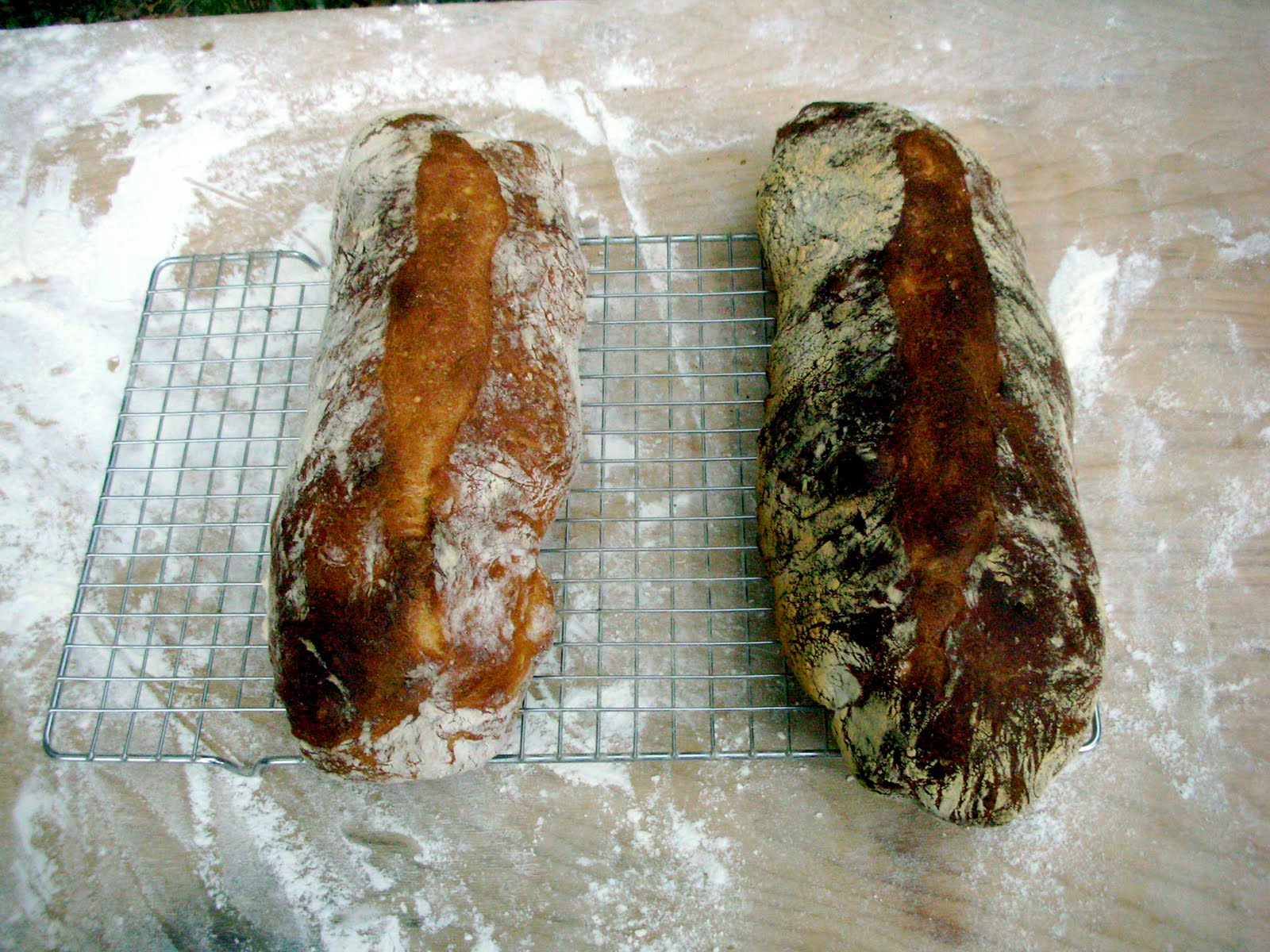
The dough for these breads was mixed at at 9:30 this morning, and they came out of my earth oven at 1:48 this afternoon.
I have nothing to complain about

Thursday, September 2, 2010

Fuel

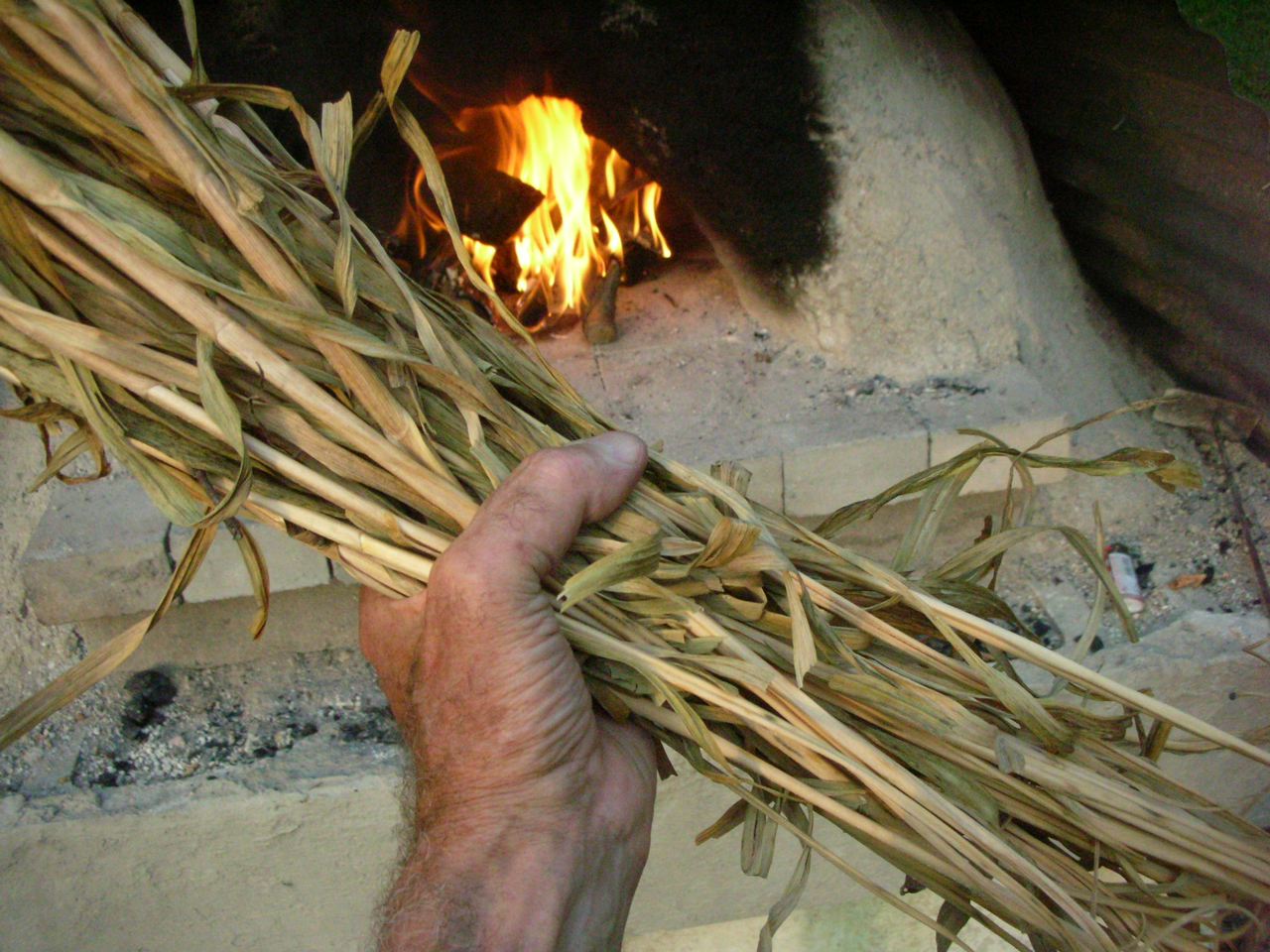
Who says you have to buy expensive hardwood to fire your earth oven. Where wood is scarce in many parts of the world, there are alternative fuels. Right here in Maine (where hardwood is readily available) there's no reason to disregard free alternatives. Whatever you use, however, must be dry, really dry.
The key to using fuel, any fuel wisely, is oven insulation. The more insulation the better. Extra insulation translates to less air pollution and more trees left standing.

Garlic stalks from the garden

There they go

Monday, August 30, 2010

School Oven

Here are some images of a 36" floor diameter, earth oven that's being constructed at a school in Maine. The work is being done by a couple of extremely dedicated teachers and some students.

 Working on stone base


Using template

Brick arch to protect oven opening
Searching for sand

 First fire

Friday, August 20, 2010

The mini earth oven

August 18, 2010
Here's what you'll need to make a mini earth oven. You can actually bake pizzas and other flat breads, but very small ones indeed. If you're not sure if you really want to construct a large earth oven, then consider making a mini oven first for practice and you'll get an idea of what could lie ahead. This is the oven that participants in a workshop will be making this fall in Maine.

3/4” plywood-cut 22”X22”
8 red bricks
sand dome 9.5” high, requires 50 pounds of sand 

50 pounds of sand equals about 3/4 of 5 gal. joint compound pail
3:1 mix for dome. 1-1/2 bags of sand. 75 pounds
4-1/2 shovelfuls of clay