Friday, November 23, 2012

Keeping it dry

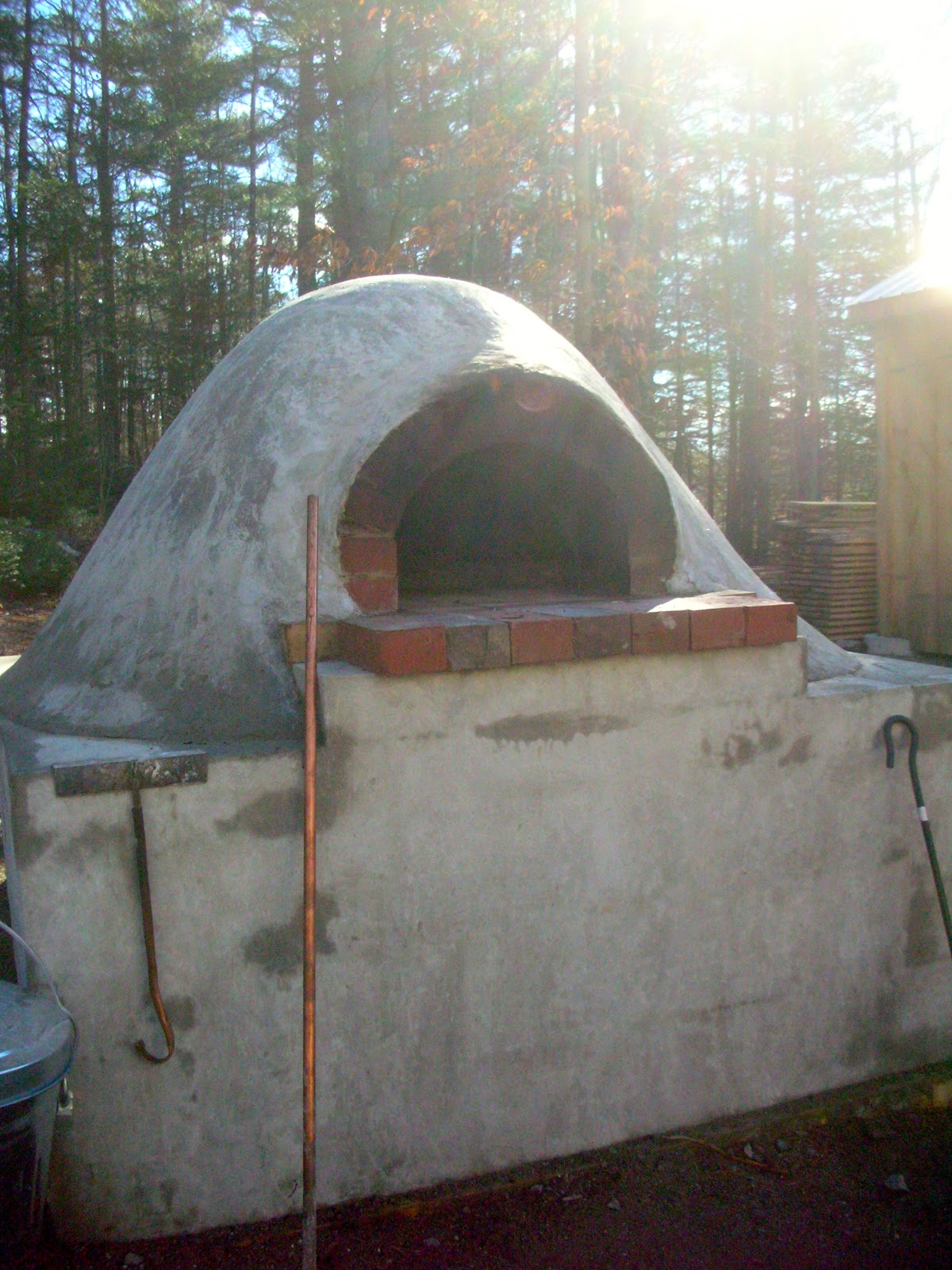
If you stucco your oven with surface bonding cement you can expect your dome to stay "reasonably" dry. However, that's really not good enough. If your earthen dome should get wet, it really doesn't take much for it to revert back to its natural state, and that would be "mud."
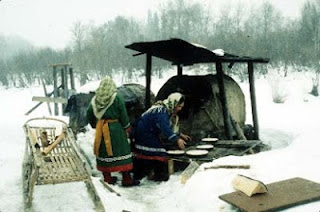
For maximum protection, consider a roof, and it can be as primitive as the roof over the Siberian oven, but by far, the simplest roof I know how to make is to drape corrugated metal roofing over the dome and fasten the four corners with bungee cables tied into the oven base.

                                                                      
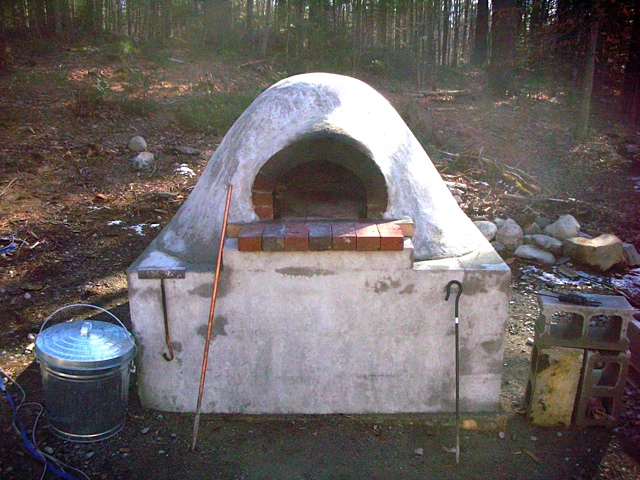
 Oven stuccoed with surface bonding cement

                                       
Simple roofing system

Easiest roofing system

Tuesday, November 13, 2012

Amanda's Oven

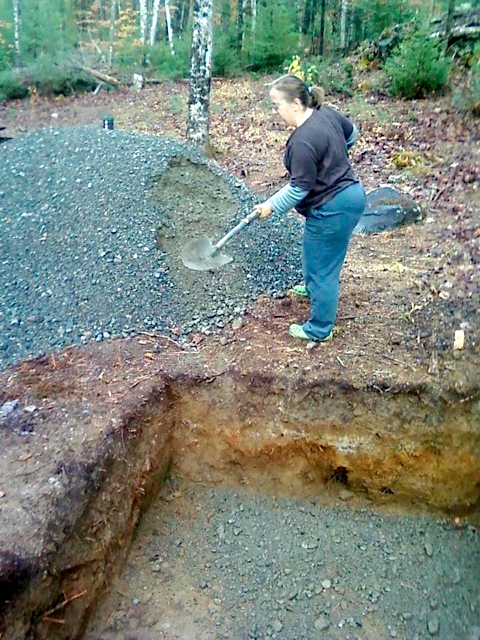
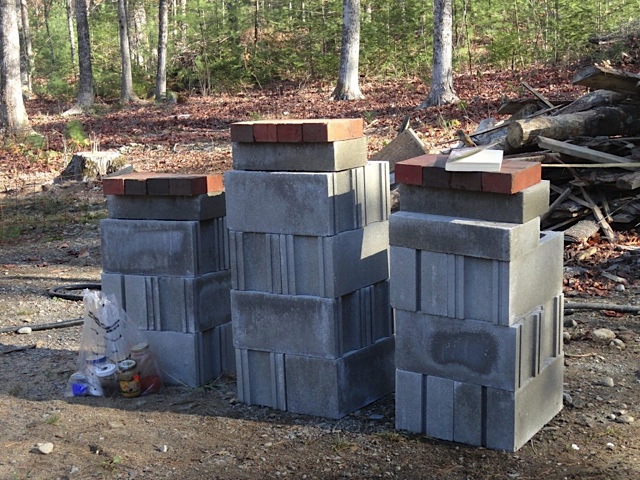
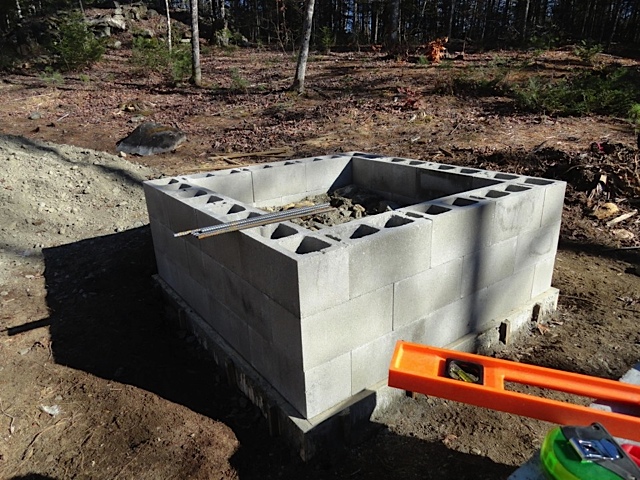
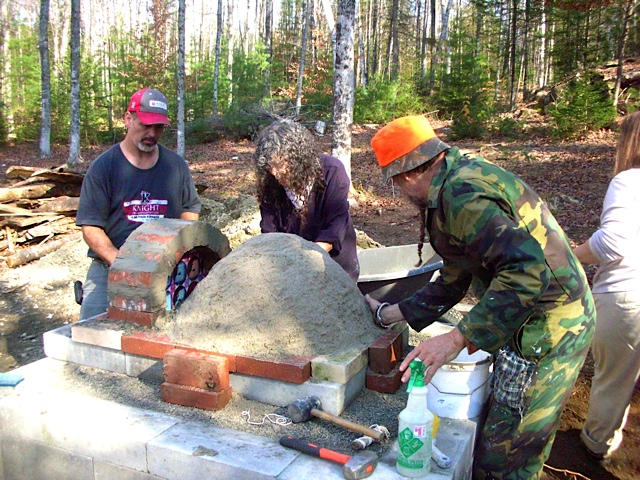
Following up on the last post, I want to add some photos just to give an idea as to how much work was required to complete the oven. It was truly a group effort, and had not everyone really put out, then the oven would not have turned out as well as it did.
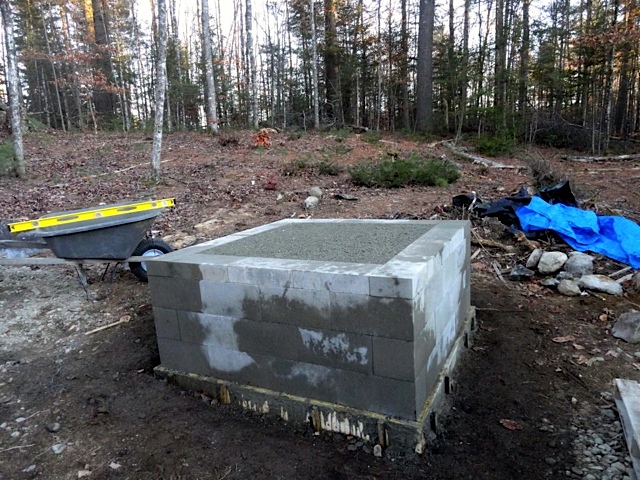
Keeping organized and having all the supplies right on the building site when we needed them helped immensely.


Completed Oven

But to get here, check out some of the construction photos.


                                                                              photo Amanda Slamm                                     


                                                                                   photo Amanda Slamm 

                                    
                                                                                    photo Amanda Slamm                                              


Sunday, November 11, 2012

Favorite Oven


I just completed an oven with a group of friends that quickly became my favorite oven.
A 31.5" diameter baking surface is big enough for all the breads and pizzas most of us would care to bake with one firing. 6" of perlite insulation above, around and below provide ample insulation to hold in the heat. Finally and equally important, I love the clean, minimalist look.
Thanks to Amanda, Reuben, Paula, Abby and Fang for helping to build this earth oven.


Life before mud

Mud


Hands


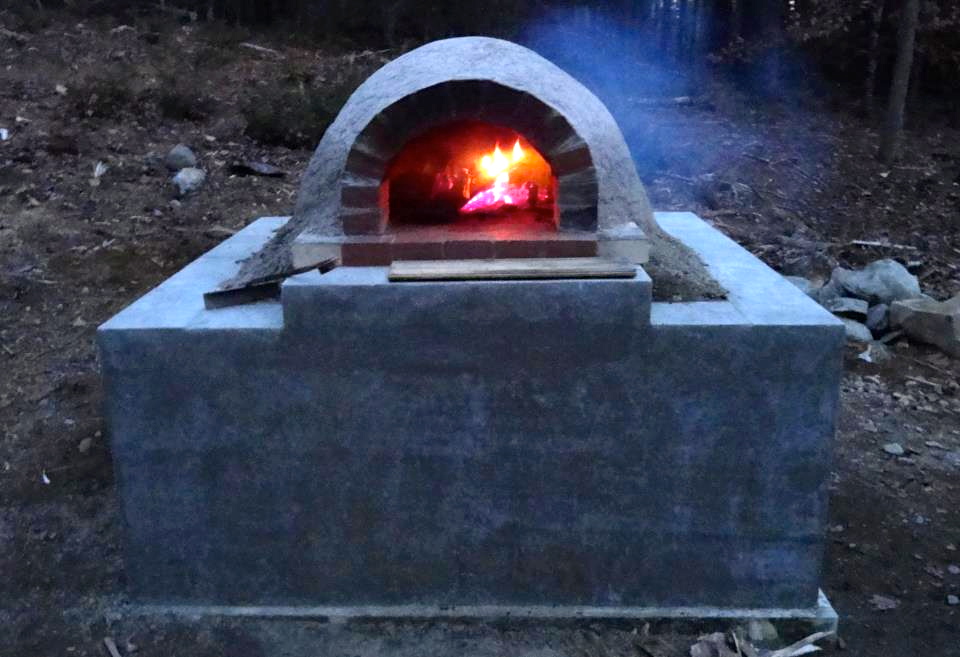
First firing before dome insulation


Completed oven


Tuesday, October 30, 2012

Masons Who Build Wood-Fired Bread Oven

If you still want an oven (of course you do) and you don't want to construct it yourself nor do you want to be purchase a prefab oven, well, there's still hope. Lots of it.
You can hire a mason to build one for you. Yes, your labor cost will be high, but the cost of materials will be less than what you would pay for a prefab oven, so everything sort of evens out.
If you decide to hire a mason, find one who has lots of experience building ovens. You're not looking for a mason who specializes in retaining walls.
I'm going to recommend three masons, two in Maine and one in Massachusetts. Sure there are lots more, but I happen to know the work of these three, and if you hire one of them, I know you'll be pleased.

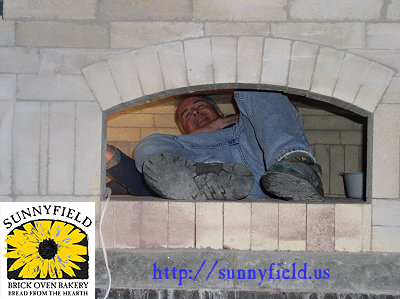
Pat Manley from Maine building the Sunnyfield Farm Bakery oven


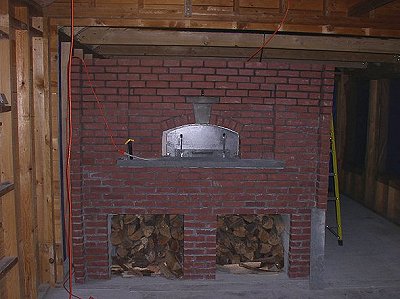
An oven by Martin Pearson from Massachusetts

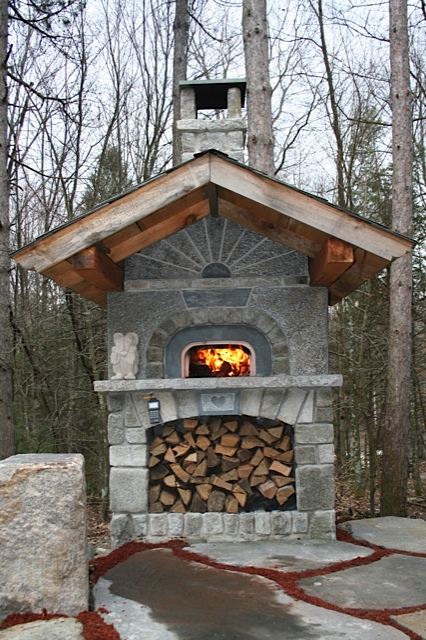
David Neufeld from Maine

Monday, October 22, 2012

Le Panyol Wood-Fired Ovens

Not everyone really wants to build their own wood-fired oven, but there are great alternatives out there. Maine Wood Heat imports the beautiful le Panyol oven from France. No, they're not inexpensive and you'll have to have someone assemble it for you if you don't have masonry skills, but they are of the highest quality.
You could alternatively hire a mason to build you a custom oven (if you go this route, just make sure you hire a mason with a good track record who has built ovens before), and in a future post, I'll discuss this in some detail. In the meantime, check out the Le Panyol and also visit the Forno Bravo site for more wood-fired ovens.

Le Panyol on wheels


Le Panyol in winter with a copper cover to protect it from the elements

Thursday, October 4, 2012

French Rolling Pin

I just started using a French rolling pin, and I couldn't be happier. For years, I had been using the standard American style rolling pin. You know the type, clunky with two handles.


Anyway, the French rolling pin is much easier to handle, and you'll find that you have lots more flexibility when rolling out a dough.
You can find one at a kitchen supply store, and that's where I found mine. However, you can easily find one on line. Breadtopia has them at a very fair price.


Wednesday, September 26, 2012

The Snake Test

When constructing an earth (clay/cob/mud, all basically the same) oven, probably the trickiest part is your clay/sand/water mixture. I like 2 parts all-purpose sand to 1 part clay and enough water to get the right texture. It's the texture that poses the problems. Your can write about it, but you really have to get your hands into the mud to know what it feels like.
If you add too much water, then your oven will slump as it's being built, and that's not good.
If you add too little water, then your mixture will be too dry and not clump together properly.
To determine if you actually are working with clay, perform the snake test as shown below.

 Abbott Meader

If it's clay, then it should hold together

Sunday, September 23, 2012

Bread Magazine


Check out this magazine concerning bread. It's free, and there are lots of interesting articles. 

Bread (issue 3 fermentation)


It's time for another magazine full of bread making inspiration and information: Issue 3 of Bread takes a close look at the topic of fermentation through instructions, baker interviews and tips. Among other things, inside the magazine you'll find the following articles:


INTERVIEW: YING SHI
(interview with her in the magazine)
Ying Shi—better known in the online world as txfarmer—is a software engineer and passionate home baker always looking for ways to improve her craft. Her skills are a great example of where deliberate practice will get you. 


Monday, September 17, 2012

Earth Oven Workshop

We just completed another successful earth oven workshop in Waterville, Maine. Thanks to everyone who participated.  
Photos by M. J. and Tom Zirolli

 oven class

 oven base being insulated with perlite

After firing the tiny oven for a couple of hours, the bottom of the plywood base was only warm to the touch. Nevertheless, if you're building a more substantial oven, wood should not be used for a base.
Please see last couple of posts concerning potential fire hazards with wooden bases.

Sunday, September 16, 2012

Fire Hazard Alert II

I want to share a photo of an oven base that was constructed on 3/4" plywood, then perlite, with a 2"X4" framework. Although there was 3 1/2" of perlite insulation between the firebrick floor and the plywood, it still burnt through. A hole was actually burnt through the plywood, and that's a very serious matter particularly if your oven is sitting on a wooden deck. As I said in my last post, it's best to avoid wooden bases unless your oven is very small and you've determined that there's no way it could burn through.
If you search the web for wood-fired ovens, you'll see lots that are built on wooden bases, but masonry or stone would be better choices.
Assuming you're still determined to build on a wooden base, instead of a 2"X4" framework, you could use a 2"X6", and that would give you lots more room for insulation.
Pour in the perlite insulation to about 1" from the top of the framework. For the last one inch,  mix 6 parts perlite to 1 part Portland cement, and then add some water to the mix until the perlite clumps together. This would be your final layer of floor insulation, and the Portland cement will harden the perlite enough to provide a better footing for your floor bricks.
It's best to use as little Portland cement as possible because the cement will create thermal boulevards reducing the perlite's insulation value.

Burnt Out Oven Base