Wednesday, November 25, 2009

Pushing It To The Limit

photo by Sara Silverstein


In my last post I showed a resurrected loaf that only minutes before was a charred wreck. Often it's possible to weasel out of difficult situations, but if those situations never present themselves, then in my opinion I'm really not exploring my full potential as an oven builder/bread baker. To arrive at a place that I am comfortable with, I'll never know where that is unless I push myself to extremes. For example, how hot can I get my oven so that I can do multiple bakes without burning to a crisp the first batch of bread. Well, I really won't know until I burn a few loaves.
Once when building an oven, I first added way too much clay to my mix, and the oven really developed horrible cracks. I tore it down even before I removed the sand mold, and built it right the second time.
Last summer, in the middle of a workshop I was giving I had an oven totally collapse because there was was too much sand added to the mix. Sure, I should have been more attentive, but I wasn't. Miraculously, in one hour, we reformed the sand mold and rebuilt the oven with the correct proportions of clay to sand. And one hour after that (no joke), we were baking pizza in the oven.
When making sourdough bread, sometimes I might be unsure of how much starter to add. I might try a tiny amount and then try a humongous amount. If I don't push it to the extreme I'll never know what the limitations or the exciting possibilities really are.
Yes, I could engineer my breads as professional bakers must do, because they are very concerned about consistency since they sell their product, but for me, being an amateur can be much more rewarding. That's the place where I want to be. I have no one to answer to, and every new bread I bake becomes, really, a quest for the grail.
After all these years, I still believe that Dylan had it right. "There's no success like failure and failure is no success at all."
Just stay with it, and don't worry about making mistakes. It's all going to work out.
Look at the photo of the bicyclist. He's not afraid to take chances, but does he know what will happen if he adds just one more box?

Monday, November 23, 2009

"Slightly" Rustic

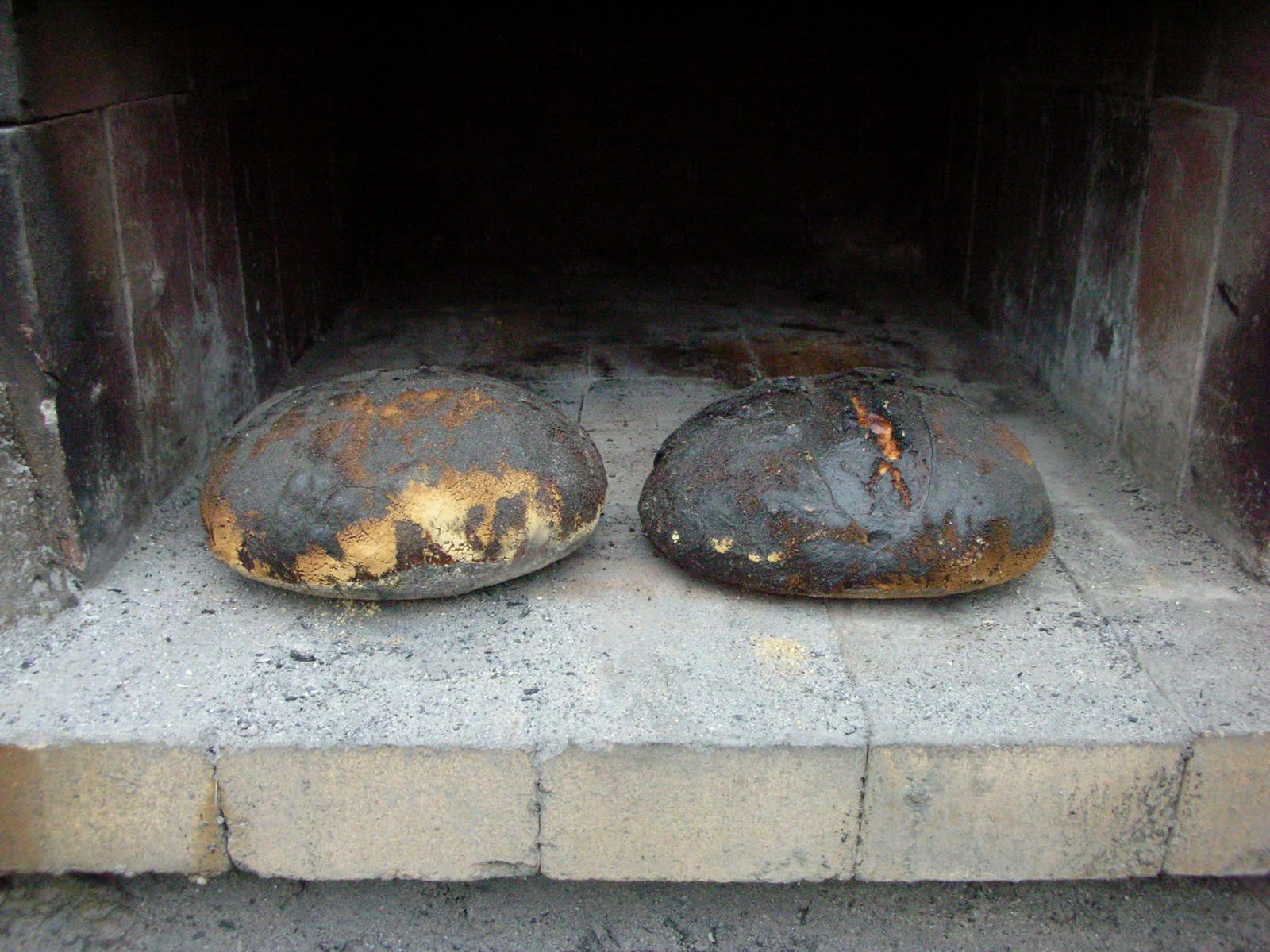
Yes, the oven was too hot, to put it mildly, but all was not lost.
The only sure way to kill a loaf is by under baking it.

Saturday, November 21, 2009

Oven Door

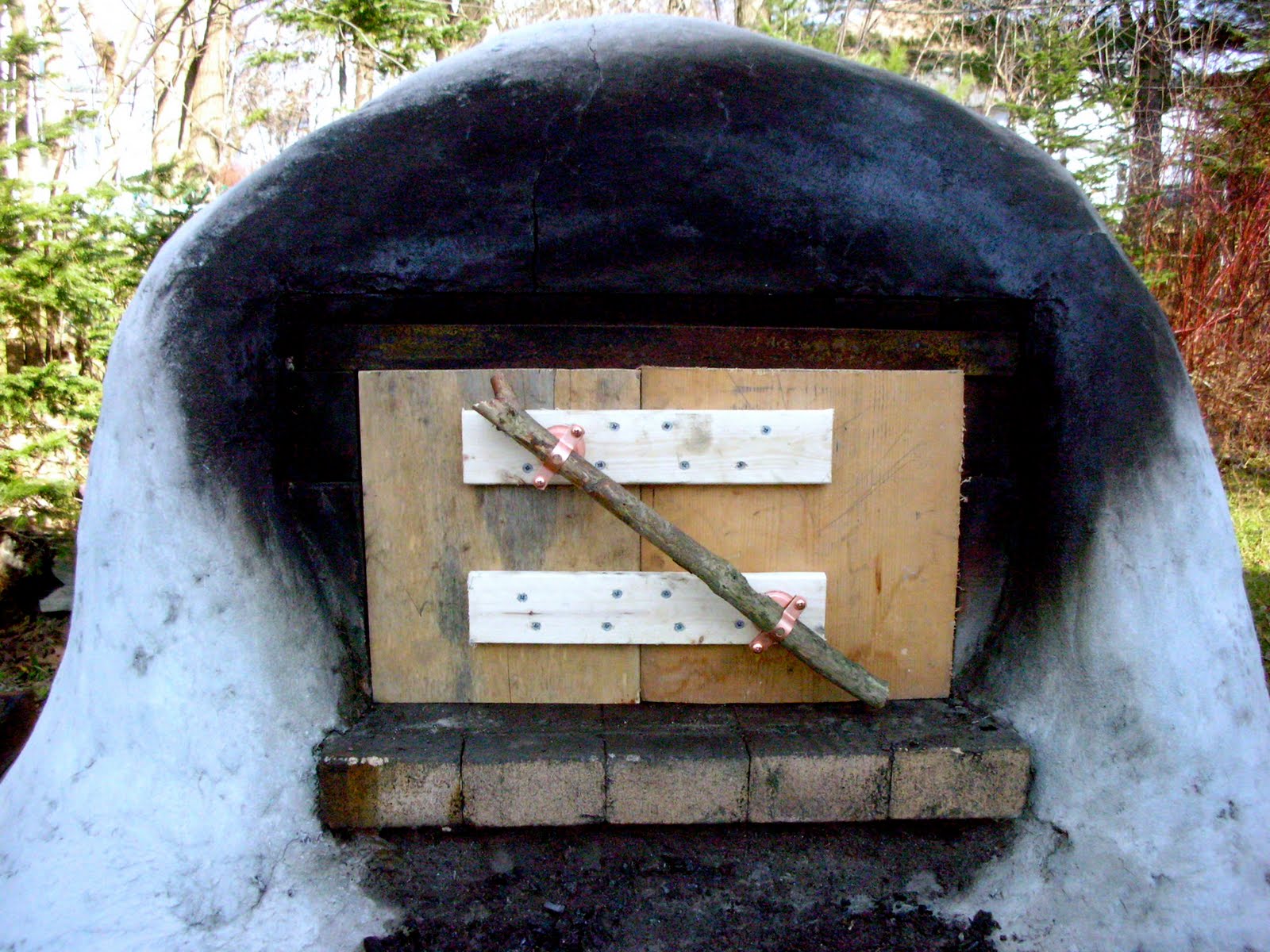
New oven door

It's amazing how much effort we put into building our ovens, and yet we tend to neglect constructing a decent oven door. I take responsibility for being one of the worst offenders. Finally, I think I've built a door that should help to contain oven heat and not burn up. The door is wood, but it has a steel backing with a 1/2" air space between the wood and the steel.

Wooden door with steel backing in profile

Without the air space, the intense oven heat could conduct right through the steel and turn my proud. new oven door into charcoal. The wooden door is the door I use for bread baking.

All steel door

When starting my fires up I use an all steel door that I prop slightly open. This restricts the flow of oxygen, creating a vortex effect, making it easier for the fire to burn.

Tuesday, November 17, 2009

More No Knead Again

No knead bread baked on an insulated cookie sheet with a stainless cover

Are the mouse holes big enough?

Just goes to show that you don't have to run out and buy an expensive dutch oven or Creuset pot.
Probably you have all you need already. I've even made insulated cookie sheets by doubling up single wall sheets, leaving an airspace. The one shown came as a Chanukah present. Yes, it's better than the one I made.

Monday, November 16, 2009

More No Knead

Stainless cover

Contrary to what is said, you do not need a dutch oven or enameled iron pot to make no knead bread. Today I made no knead bread in an iron skillet with a stainless steel cover. The cover is what's important, not the nature of the material. Next, I'll be experimenting with an insulated cookie sheet and the stainless cover.

Superlative loaf

Monday, November 9, 2009

No Knead Mythology

Mark Bittman's video of Jim Lahey's method of making no knead breads has been seen on YouTube over 532,753 times. Right at the beginning of the video Jim says even a four year old can make bread with his techinque. If you're like me, I tend to believe what people tell me unless I have reason to believe otherwise. Hey, if a four year old can do it, then surely I can, and that's what I suspect most people thought who saw the video.

The reality is, a four year old cannot make this bread, and I'm willing to bet that when most bakers tried this technique, they were initially disappointed, but were too embarrassed to admit that they could not do something that ostensibly a child would have no problem doing.

The no-knead bread is not a simple bread to make. In fact it's quite a bit more difficult to make than a standard yeasted bread where you knead the dough. Here's the problem: The no-knead dough is a very slack (wet) dough, and this type of dough can be so difficult to work with that you might very well find a slimy mess on your counter that is impossible to handle. That was my first experience, and when I finally was able to dump the dough in the hot iron pot, I didn't realize that it would stick hopelessly to the bottom of the pot.

My problem was that I followed Jim Lahey's instructions in the video, and I followed them to the letter. I should have known better than to follow explicit instructions. In fact, I've been telling folks for years not to follow explicit instructions.

First off, he says to use three cups of flour. When you scoop flour, as he does, you don't really know what you're getting. The only way to really know the honest amount is to weigh the flour. If you don't have a scale, then you have to go by observation and feel, and that's okay. In fact, that's what I usually do, but remember, I needed to prove to myself I could do what a four year old could do.

The video shows the dough being dumped on the counter, and then soon after, the dough is being formed up. Wait a minute here. Certainly more flour was worked in to make this possible, but we don't see it.

I also noticed that the iron pot Jim Lahey was using was sitting on a cookie sheet in the oven. The cookie sheet will deflect some of the oven heat away from the bottom of the loaf, helping to prevent the bottom from burning. Maybe people should be told these things.

Bakers have been making no-knead breads long before Mark Bittman popularized the technique, and I do believe that the very finest loaves can be made using this technique, but you really have to see and read between the lines.

Monday, October 19, 2009

No Knead Bread Revisited

Mark Bitman's video of his visit to Jim Lahey's Sullivan Street Bakery has been viewed over a half million times. I have looked at the video several times, but I was not able to achieve the results shown, and now I think I have figured out why. After Jim dumps out the dough on his work table, the video is edited, and suddenly he's forming and shaping the dough. Sorry, but you just can't shape such shaggy dough without an intermediate step. My feeling is that what you don't see is extremely relevant. I suspect the shaggy dough is rolled around with flour until it firms up enough to shape. The story in the New York Times also talks about a two hour rest period, but this is never mentioned in the video. To make this excellent bread, you really need to have all of the information. The recipe calls for three cups of flour, but I think you might have better results with three and one half cups.

Tuesday, October 13, 2009

Steam

Oven sprayer and assorted other gadgets


To get a good crust on your breads made in an earth oven, you need steam. A fully loaded oven with breads might create enough steam all by themselves, but the easiest way to make steam is with a sprayer. The little $1.00-$2.00 hand sprayers won't do it. You'll have to invest at least $12.00 for one that will put out the volume required. These are the ones you have to pump up and are sold in garden supply stores. I sent to Amazon for mine. Only a fool would use a sprayer that once held herbicides and/or pesticides, so I won't tell you not to use one of these.

Excellent crust color and texture

I just learned that anyone can download a free version of The Bread Ovens of Quebec. If you don't have a hard copy and can't find one, then I highly recommend the electronic version.

Sunday, September 27, 2009

Apple Crisp


Bagels came out and the apple crisp went in. The most important thing to know about apple crisp is that it has to be served cold. Just like apple pie.