Sunday, July 17, 2011

Sourdough Rye

Made with 100% rye flour, a little salt and water, this bread is so good that I keep asking myself why I should make anything else. I learned to make this bread many years ago by watching Peter Schumann at the Bread and Puppet Circus in Vermont.
Rye flour is not easy to work with, to put it mildly, but I assure you, the results are well worth the effort.
Slice the bread as thinly as you can and dip in extra virgin olive oil in which you have crushed some garlic. There's really nothing like it.

Tuesday, July 12, 2011

It's Not Too Late

Join us at The Kneading Conference this summer for workshops, discussions and really lots and lots of bread. You won't be disappointed. I'll be leading a workshop on earth oven construction, and I'd sure like to see you there.


Wednesday, June 29, 2011

Oven In France

Hi
I just returned from France where I built a brick oven with a remarkable handyman, Fernand Toucourt. The oven base was constructed with stones found right on the property, and there were lots of them.
The oven itself was constructed with used (free) firebricks and the insulation was a mixture of vermiculite and cement. Finally, we stuccoed the dome with cement.
Materials cost less than $100.00. Not bad.
Pizzas took less than three minutes to bake.


Sunday, June 5, 2011

Bread failures


When 550ºF is not 550ºF.
When I'm preparing to bake bread, I normally fire my for approximately an hour an a half and put in the breads when the temperature is about 550ºF. and falling. Yesterday I put a loaf into the oven when the temperature was also 550ºF, but the oven was not falling because it had been fired six hours earlier and was fully saturated with heat. I attempted to rush the process, and I achieved a failure. The loaf was more than a little rustic in appearance; it was burnt.
A simple temperature reading is certainly not enough. I should have waited until the oven was clearly falling.

Yesterday's Workshop

June 4, 2011

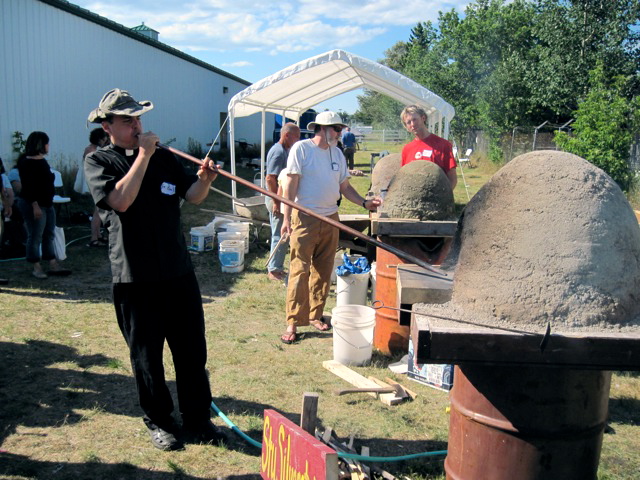
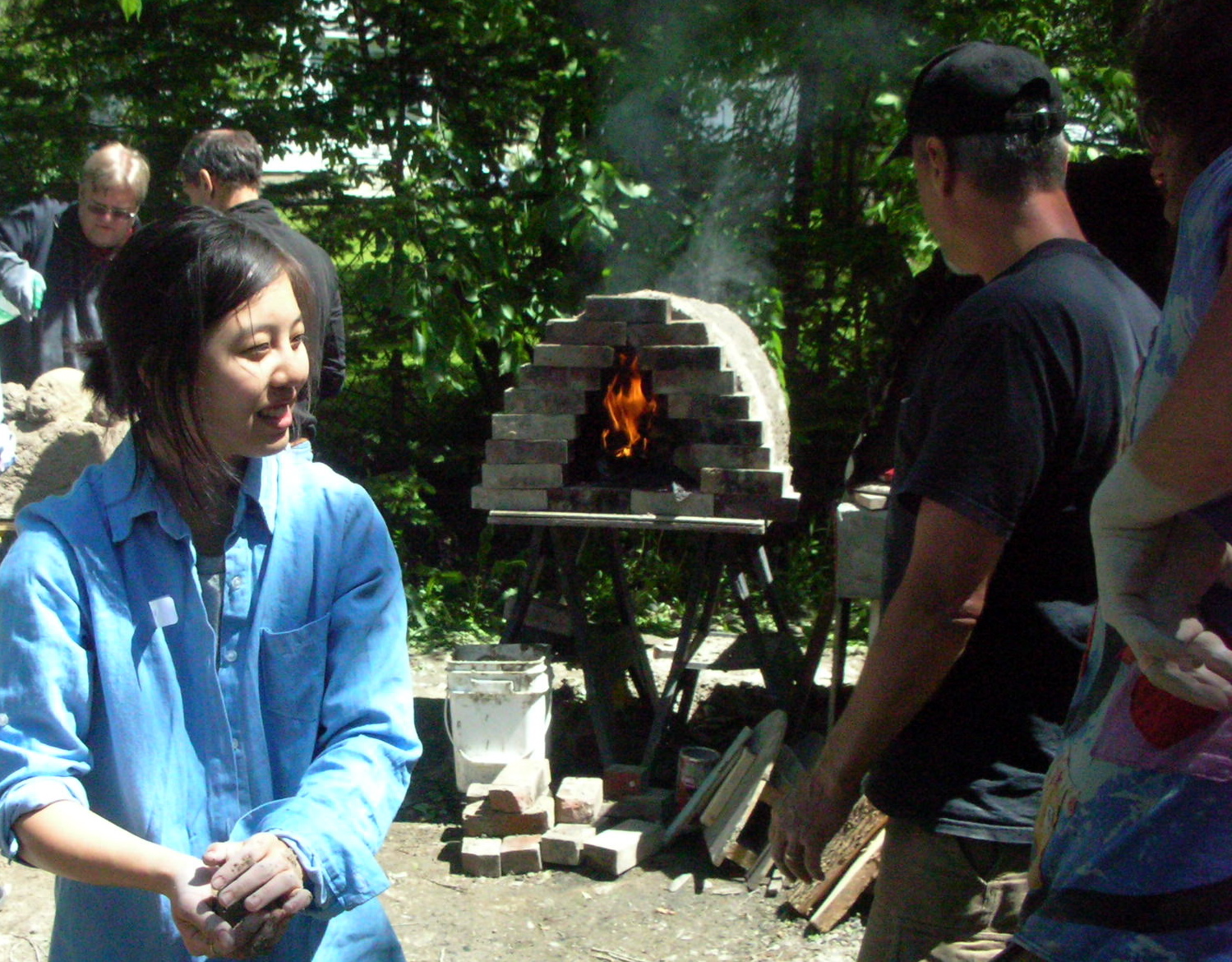
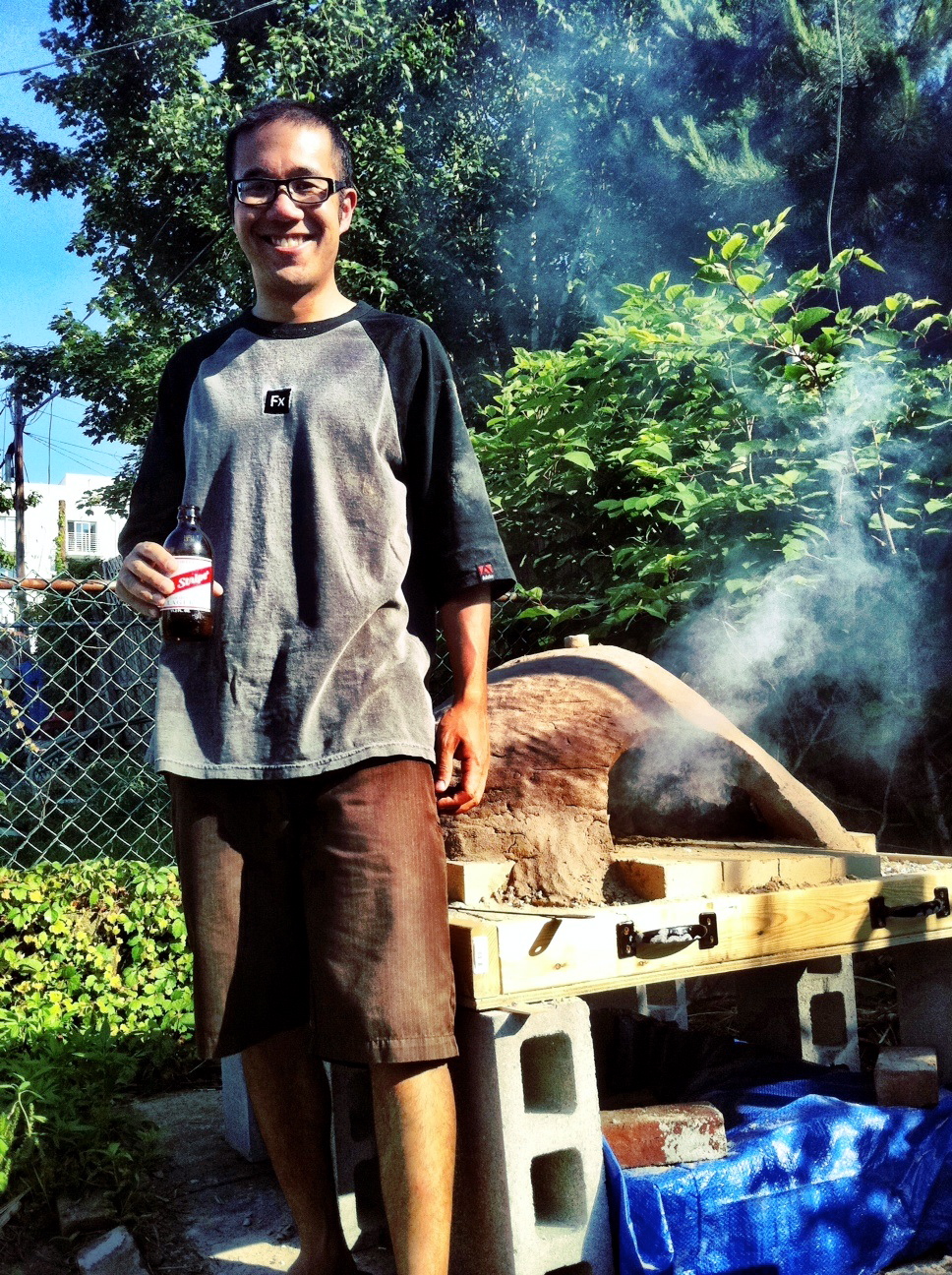
Under clear blue skies, no humidity and a temperature of 72º F., no one could complain. Besides, we constructed three mud ovens that participants took home and one demonstration brick oven that was an instant hit. In fact, two of the participants returned today to gaze in wonder at the simple brick oven that they had constructed yesterday. And who would blame them.
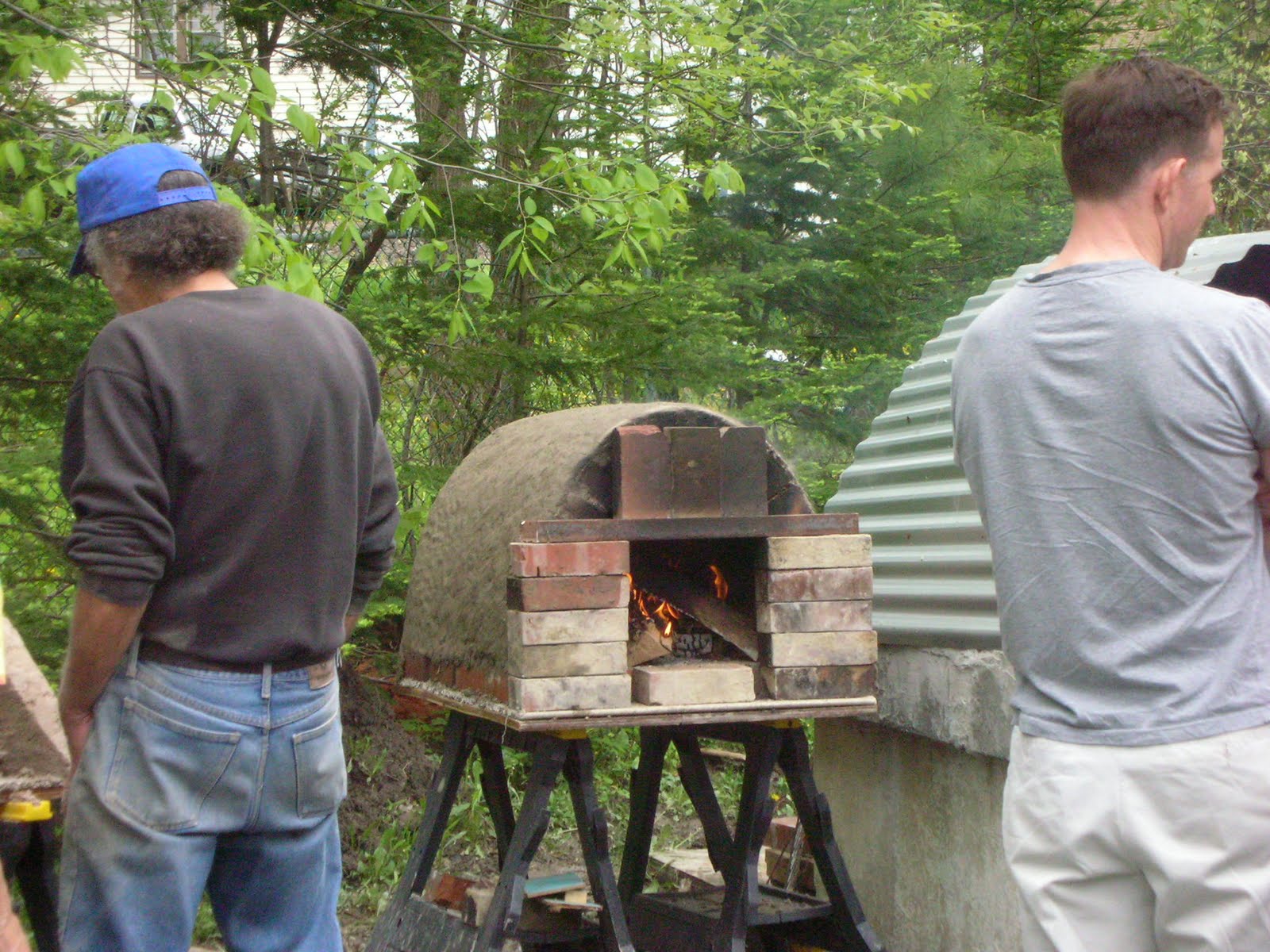
The oven took three fledgling oven builders about two hours to construct.
The cost of the materials was about $68.00
 Low-cost, easy-to-build brick oven
Immediately after building the oven, it was fired up, and within one hour we were making pizza. The floor temperature easily reached the desired temperature of 700ºF.
               At work

  Brick oven in back
(folks were still mixing mud, and the brick oven was already done and fired up)

Not only did this oven go up faster than the little mud ovens, but this was supposed to be a mud oven workshop. Sure, folks enjoyed the mud ovens, but really, I think most decided that they'd like to have the low-cost brick oven in their back yards.


  Yesterday's oven builders


But will they ever be able to get it out of the car?


Sunday, May 29, 2011

The Corbel Arch

Having just finished a workshop where the participants completed two mud ovens and one brick oven, we then needed to constrict the opening of the brick oven so it would better retain heat. We first piled up a few bricks and with two short lengths of angle iron, we were easily able to make the opening smaller.
Without angle iron, a corbel arch is also a simple way to accomplish the same task. This type of arch is found in many parts of the world, but it is particularly prominent in Maya architecture.
The aesthetics of your oven design can be a reflection of your own unique ideas. These simple low-cost ovens really lend themselves to your creative spirit. If you make a mistake, well, no big deal because you can try something else. 

Friday, May 20, 2011

San Francisco Sourdough

Aside from the fact that the wild yeasts and bacteria that populate the city of San Francisco can be found elsewhere, I really think that the sourdough breads from San Francisco do have a distinctive taste. The breads I make far from San Francisco really don't taste very much like the breads from the bay area even though the starter I use may be similar.
A curious thing about starter (at least mine) is that it seems to know if I'm away on a trip (just like a pet), and I am punished for not giving it the close attention it is used to. Upon returning home, I find my starter balky and resists getting motivated again.
I know it's crazy, but do the yeast and bacteria have some type of awareness that we fail to comprehend.
Bakers prepare sourdough bread at the Boudin Bakery at Fisherman's Wharf in San Francisco

Thursday, May 19, 2011

Bjorn Zipprich's dual chamber oven

Bjorn has constructed a very interesting earth oven that has two chambers, and because of the chambers, air pollution is significantly reduced. This is explained in the video.


 Bjorn's dual chamber oven merges with the austere New Mexico landscape

Wednesday, May 11, 2011

The Tandoor

The tandoor is a vertical type oven that is ubiquitous in many parts of the world, particularly India and the Middle East. It is primarily used for making flat breads.  In the New York Times today there's a story about an American who is manufacturing tandoors in the United States. For me, I'll stay with my traditional front loading mud oven.

Tuesday, May 10, 2011

Sally's Apizza

The best pizza I ever had came from Sally's Apizza in New Haven, Connecticut. This is not wood-fired pizza, but rather, it's coal-fired.
Pizza "experts" always say to use high gluten flour for the pizza crust, but when I saw someone from Sally's interviewed, it became clear that they use a lower gluten flour because they said they could never "toss" their pizza dough because the dough would fall apart. They claimed that bakers who "toss" the dough, only do it as a publicity stunt, and you need a high gluten flour to "toss" or "spin" the dough.
What kind of flour do you use for pizza crusts?